Banner Line

On June 16,2013 Vietnamese police defrocked/tortured Khmer-Krom monk Ven. Ly Chanda of Prey Chop Temple in Lai Hoa, Vinh Chau, Soc Trang province. June 20,2013 Venerable Thach Thuol and Abbot Temple Lieu Ny of Ta Set temple (Soc Trang-Khleang province) defrocked and imprisoned in Prey Nokor (Saigon) city by the Viet authorities. In Phnor Dach (Cau Ngang) district, Preah Trapang/Tra Vinh) Khmer Krom prohibited from watching Cambodian TV signals.

A Group of 20 Vietnamese Men Attacked Khmer Krom Monks

On February 10,2013, a group of 20 Vietnamese men and women attacked three Khmer Krom monks and two Khmer Krom laypeople on public road in Vietnamese-concentrated area Cau Quan, Tieu Can district, Tra Vinh province, the Mekong Delta (South Vietnam).

Three Khmer Krom monks and the two Khmer Krom laypeople were riding motorcycles while on their way to conduct their religious services, the group of  20 Vietnamese first heckled some racial slurs at the Khmer Krom individuals prior to physically attacked them.

The most serious injured Khmer Krom monk, Venerable Thach Tam, was accepted to a hospital but later denied any treatments by the Vietnamese doctor on fear of the authorities.  Venerable Thach Tam is being forced by the Vietnamese authorities not to speak  to anyone of his health conditions, however we have learned that his whole body and especially his head are still in serious pain and with many bruises.

On this incident, the Vietnamese authorities cowardly and unjustly put on a public trial of the group 20 Vietnamese attackers and declared them innocent on ground of under-age.  This is another case of travesty of justice when the Khmer Krom are the victims.

Map shows location of attack in the Mekong Delta (South Vietnam).

...Read more>>>

In Vietnam, Draconian Decree Would Clamp Down on Blogs, Online Speech

By Simon Roughneen, PBS.ORG - February 11, 2013

PENANG -- "Reactionary group leader sentenced to life in jail" ran the headlines in Vietnam's government-linked press earlier this week.

Such coverage sheds light on how the media works in the one-party state where online writing has filled a void. In state-run mainstream media, topics such as power struggles within the ruling Communist Party and relations with China are often taboo, and challenges to authoritarian rule are dismissed with old-school Soviet slurs.

Professor Ben Kerkvliet, a Vietnam specialist at Australian National University, told MediaShift that "my sense is that the Internet has enhanced knowledge and awareness among many Vietnamese, especially younger ones and urban folks, about shortcomings of various levels of government. Many Vietnamese now get news from a variety of sources, ranging from government and party-run papers and magazines to unauthorized blogs and newspapers to international news organizations."

But new measures currently being considered by the government could tighten restrictions on Vietnamese who want to speak their minds online.

In April 2012, the Ministry of Information and Communication introduced the Decree on the Management, Provision, Use of Internet Services and Information Content Online, which in its first reading would force foreign content providers to increase cooperation with Vietnamese officials by removing content deemed illegal and potentially housing data centers within the country. The proposed code could require users to use their real names online, chilling free speech.

CONTRASTING COVERAGE
Phan Van Thu, the group leader referenced in the headline, was part of a group of 22 deemed subversive by the Vietnam government. The rest of the group got jail terms of 10 to 17 years, meted out by the People's Court in Phu Yen Province after a week-long trial.

According to the Vietnamese media, "the defendants were accused of running the reactionary political organization between 2004 and February 2012, operating as a branch of an eco-tourism company." And in what is usually a red flag for the Vietnamese government, the report said the group "received financial contributions from a number of overseas Vietnamese."

In contrast to domestic coverage, international news reports described the group, known as the "Bia Son Council for Public Law and Affairs," as dissidents or activists -- the latest to become part of a drive by the Communist Party of Vietnam to shut down groups who disagree with how the country is run.

For Vietnamese accused of having links to foreign-based organizations that the Communist Party sees as threats to its power -- such as the U.S.-based Viet Tan -- incarceration is usually the outcome.


Bill Hayton, author of "Vietnam: Rising Dragon," told MediaShift that "while the Vietnamese security apparatus is prepared to tolerate protest and criticism it is absolutely intolerant of dissidents working with foreign organizations, particularly those based in the United States. I think its pattern of behavior and its decisions about which dissidents to arrest is intended to draw a clear distinction between 'legitimate' dissent and 'illegitimate' treachery."

The accused were assigned a lawyer by the government, Nguyen Huong Que, who said after the verdict was announced that "the sentences are adequate for their crimes."

Intriguingly, the group was described by human rights activists as followers of Nguyen Binh Khiem, a 16th-century Vietnamese version of Nostradamus, who "dreamed of building a new 'Utopia' in which science, nature and humankind would be harmoniously balanced."

MORE ARRESTS
In January, 14 activists and writers were sentenced to up to 13 years in prison, though in the meantime the Vietnamese government freed U.S. citizen and Viet Tan member Nguyen Quoc Quan after nine months in prison. That was followed by the February 6 freeing of lawyer Le Cong Dinh, who was detained since June 2009.

Despite the releases,, however, Vietnam's human rights situation is getting worse, said academic Carl Thayer, a prolific commentator on Vietnamese politics "This year alone at least thirty-six persons have been sentenced to prison on trumped up charges of attempting to overthrow the socialist state," he wrote in a new research note.

When Vietnamese citizens voice anger about land grabs and corruption in Vietnam, they are sometimes tolerated, sometimes not, in what is an opaque legal culture. Sometimes journalists in the mainstream press cover these issues -- though it is not clear to what extent such coverage is approved in advance by authorities or to what extent the coverage is linked to faction-fighting or vendettas within the Communist Party.

But for some who write scathingly about alleged government malpractice, incarceration is often the outcome. Le Anh Hung was arrested in late January and is being held at a psychiatric institution in Hanoi -- a form of detention reminiscent of Soviet-era practices. Le was subsequently freed on February 5.

Le Quoc Quan, a lawyer based in Hanoi, spoke to MediaShift in 2012 about the importance of online media in Vietnam where print and TV is linked to or run by the Community Party of Vietnam, the only political party in the country.

"The citizen's press, non-official press, posting via social networks, SMS, Facebook, and blogs is an ongoing development and playing a more and more important role in the society," said Le Quoc Quan last September. Le Quoc Quan was arrested in late January on tax-related charges - allegations that human rights groups say are trumped-up - and has been held incommunicado since.

NEW MEASURES
Online sources have filled the void created by party-run media, but that too is now threatened.

For Vietnamese already used to restrictions, the proposed code could require users to use their real names online and for bloggers to post their real names and contact information on their blogs -- a potential game-changer for Vietnamese who, caught between not wanting to go to jail and wanting to write honestly, use pseudonyms when writing online.

One motivating factor in the government's drive to force people to write under their real name could be allegations posted on blogs last year - which were later refuted - that Prime Minister Nguyen Tan Dung's daughter put money into a controversial residential development project outside Hanoi.

However the initial draft contained vague catch-all provisions seemingly aimed at deterring commentary that could question the government, prohibiting Internet users from "undermining the grand unity of all people," or from "undermining the fine customs and traditions of the nation" as well as "abusing the provision and use of the Internet and information."

Soon after the decree was first announced, 12 U.S. lawmakers, both Republicans and Democrats, wrote to Facebook, Google and Yahoo, saying, "We strongly urge you to advocate for the freedoms of speech and expression for the citizens of Vietnam by continuing to provide your technologies to the people of Vietnam in a manner that respects their rights and privacy."

COUNTERPRODUCTIVE?
Part of the reason Vietnam's government seems so intent on crushing those who suggest an alternative form of government is economic -- numerous corruption scandals and slowing foreign investment forced a public apology from the ruling party last autumn and prompted speculation that if the economy stalls longer-term, more Vietnamese could question one-party rule.

But tightening the net too tautly around the web could prove counterproductive for Vietnam's "emerging economy."

Research by the McKinsey & Co. consultancy estimates that the Internet "contributes an average 1.9 percent of GDP in aspiring countries," based on a survey of nine states, including Vietnam.
...Read more>>>

Asia Surge: US Marines Heading to Vietnam, Cambodia

US Hopes to Increase Presence Across Pacific
by Jason Ditz, AntiWar.Com- February 06, 2013


Obama Administration officials have hyped their planned “Asian pivot” for awhile, an effort to get more US combat troops deployed in nations across the Pacific Rim in spite of the US not actually being in any wars there. Today Marine Corps Commandant Gen. Jim Amos revealed his branch’s plans.

The US Marines currently have two battalions “permanently” deployed across the Pacific Rim, mostly Okinawa and Guam. This will be increased to add a third battalion, with an increase in troops in Okinawa, as well as Vietnam and Cambodia.

The Vietnam mission is scheduled for July, and will center around training locals in disposing of unexploded land mines still littering the nation since the US war in that nation a generation ago, while the Cambodia deployment will increase US ties with the regime there.

Amos expressed hope that the Vietnam deployment would build relationships to the point where the Marines could establish a training and operational relationship with the Vietnamese military, while Lt. Gen. Terry Robling says that deployments into Malaysia, Indonesia and even India are also “on the horizon.”
...Read more>>>

China Buys Cambodia

Source: Strategypage.com

February 7, 2013: China recently approved a $195 million loan for Cambodia so that poverty stricken country could buy new military equipment. Not surprisingly Cambodia used some of that money to order twelve Chinese Z-9 helicopters. The Z-9 is a license built version of the French AS 365N Dauphin. It's a four ton chopper with a two ton payload.

China has built over 200 of the Z-9s and many have been armed (with twin 23mm cannon, torpedoes, anti-tank missiles, and air-to-air missiles). The Z-9WE is the export version which is modified to more easily accept Western electronics and weapons. Cambodia is initially receiving the transport version of the Z-9.

China is the main supplier of military equipment to Cambodia. The U.S. had been ready to supply this material but backed off because of the corruption and mismanagement of the Cambodian government. That sort of thing does not scare off the Chinese. Moreover, the Chinese need some allies in this part of the world, because most other nations are uniting against Chinese claims to control the entire South China Sea. Cambodia has no problem with that because it has no seacoast on the South China Sea (just the Gulf of Thailand). Thus Cambodia is the only nation in Southeast Asia that is not hostile to China. ...Read more>>>

Vietnam frees human rights lawyer

Le Cong Dinh
Source: 

Vietnam on Wednesday freed a prominent human rights lawyer who served more than three years of a five year sentence for trying to overthrow the regime, his family said.

"He was freed before Tet (Lunar New Year) and because his mother's health is poor," said Dang Ngoc Anh, the sister-in-law of lawyer Le Cong Dinh, 44.

Dinh was one of four democracy activists convicted in January 2010 at a day-long trial in southern Ho Chi Minh City that was was condemned by human rights groups and the European Union.

Dinh, whose sentence also included three years of house arrest after his release from prison, had been detained since June 2009.

Dozens of activists have been jailed since Vietnam -- a one-party state that forbids political debate -- began a new crackdown on free expression in late 2009.

According to New York-based Human Rights Watch, Vietnam jailed at least 33 activists in 2012 based on vaguely defined articles in its penal code that criminalise the exercise of civil and political rights.

On Monday Vietnam sentenced 22 activists to lengthy jail terms ranging from 10 years to life imprisonment, after one of the country's largest subversion trials for years.

Rights groups say charges of spreading anti-state propaganda and attempting to overthrow the regime are routinely laid against peaceful dissidents in Vietnam.
...Read more>>>

Cambodians Pay Tribute to King, but Heed Hun Sen

By CHUN HAN WONG, Wall Street Journal
January 31,2013


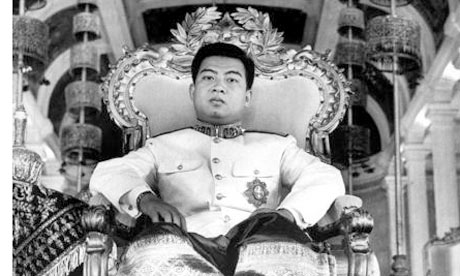
Former King Norodom Sihanouk
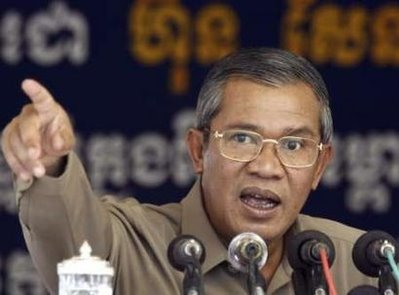
Cambodian Dictator Hun Sen
PHNOM PENH—Ahead of Monday's cremation of Norodom Sihanouk, Cambodians are expected to flood the streets this weekend to mourn their two-time king. But many Cambodians say the former monarch's death last year only underscores that control of this Southeast Asian nation lies elsewhere—with its longtime prime minister, Hun Sen.

"The king has some power," Seourn Sok, a 25-year-old construction worker in Phnom Penh, said of the ex-monarch, who gave up his throne to his son Sihamoni in 2004 and died in October at the age of 89. "But far less than Hun Sen."

Only 60 years old, Mr. Hun Sen already ranks among the world's longest-serving leaders. Since taking office in 1985, he has become known by rivals and supporters alike as a Machiavellian operator who presided over Cambodia's recovery from civil war and genocide but who also quashed dissent and outmaneuvered opponents. He has done so, rights groups say, using cronyism, violence and intimidation.

"Hun Sen's leadership is very much a one-man show, and he decides on almost everything," said Lao Mong Hay, a Cambodian academic and political analyst. "His administration is like a cluster of fiefdoms" run by his cronies, Mr. Mong Hay said.

Mr. Hun Sen didn't respond to requests for an interview.

The prime minister and his Cambodian People's Party are the only power that most of Cambodia's 14.5 million people have known. Along city streets and rural lanes, his portrait is splashed on royal blue billboards. Mr. Hun Sen appears almost certain to receive another five-year mandate in a national election set for July: The CPP handily won senate and local elections last year, while a late-2011 poll by the U.S. government-funded International Republican Institute found that 81% of 2,000 Cambodians surveyed felt the country was on the right path.

Mr. Hun Sen's political dominance is welcomed by many local tycoons and even some foreign investors who credit him for restoring stability and enabling economic growth that has ranked among Asia's fastest in the past decade.

"What there has been over the years is tremendous continuity in the government. In a place like Cambodia, it's probably a good thing to have that stability," particularly because state institutions are weak, said Brett Sciaroni, a Phnom Penh-based American lawyer who advises Mr. Hun Sen's government on business and investment issues.

Cambodia ranks among the world's least developed countries, with about 30% of the population living below the poverty line and international aid providing roughly half the annual budget.

Development has been marred by allegations of abuse of power. In a November report, Human Rights Watch blamed Mr. Hun Sen and his supporters for more than 300 politically motivated killings since 1991, when a United Nations-brokered agreement ended a civil war. The rights group also accused the government of manipulating the judiciary and police.

Activists and Western aid donors accuse the government of neglecting development goals and pursuing environmentally destructive policies, such as granting concessions to local and foreign companies seeking timber, cash-crop and mineral resources.

Mr. Hun Sen has dismissed such claims. He defended his rights record during a meeting with President Barack Obama in Phnom Penh last year, saying Cambodia has unique circumstances that drive domestic policies, according to the White House. The prime minister has also played down the impact of the controversial land leases, although in May he suspended grants of new leases and said authorities would confiscate concessions that involved illegal land grabs.

The son of peasants, Mr. Hun Sen joined the Khmer Rouge in 1970 and lost an eye while fighting Cambodia's then pro-U.S. government. He defected to Vietnam in 1977 to escape internal Khmer Rouge purges, returning two years later as part of a Vietnamese invasion that toppled Pol Pot's genocidal regime. He served as foreign minister in the new Hanoi-backed government before becoming premier.

Mr. Hun Sen faced few serious challengers until U.N.-backed elections in 1993 forced his CPP, which placed second, into a coalition with a royalist party. Mr. Hun Sen wrested full power four years later in a brief but bloody skirmish. The CPP won the next three elections—most recently in 2008, when it took 90 seats in the 123-member legislature.

The formerly Communist CPP boasts branches across Cambodia's vast rural districts and in urban centers. The party appears to have handily outspent the opposition on campaigns, and it enjoys the support of tycoon-controlled broadcasters whose stations dominate the country's television and radio waves. One broadcaster is headed by Hun Mana, a daughter of the prime minister.

In recent years, China's generous support for the government—mainly through aid loans and infrastructural investment—has also bolstered the ruling CPP's development agenda.

A chess player and a heavy smoker, Mr. Hun Sen has said he plans to rule until he is 90. Many Cambodians think he will eventually try to hand power to his children. Eldest son Hun Manet, 35, is a graduate of the U.S. Military Academy at West Point—which admits some international cadets—with an economics doctorate from the University of Bristol. Mr. Hun Manet heads the Cambodian military's counterterrorism arm and is deputy chief of his father's personal bodyguard unit.

Still, Mr. Hun Sen's challengers remain hopeful. Rural discontent has grown over alleged land grabs by private corporations. With steady economic growth producing an increasingly urban and better-educated population, the electorate could demand greater accountability and transparency.

Opposition leader Sam Rainsy, a former finance minister, led a merger of the country's two main opposition groups last year to form the Cambodia National Rescue Party. Mr. Rainsy is exiled in Paris due to what he and rights observers have called a politically motivated conviction in 2010 for spreading disinformation and falsifying the Cambodia-Vietnam border on a map. Mr. Rainsy said in an interview that the opposition enjoys "strong popular support."

But analysts aren't convinced the French-educated former fund manager can win sufficient backing from Cambodia's rural poor. In the 2008 parliamentary election, the Sam Rainsy Party received 21.9% of valid ballots while the Human Rights Party took 6.6%, combining for just 29 seats.

— Sun Narin contributed to this article.
...Read more>>>

Democracy Activist Released and Deported from communist Vietnam

RFA - January 30,2013

Authorities send the opposition member home after nine months of detention.

Nguyen Quoc Quan was detained in Saigon (Prey Nokor) City,
The government of Vietnam has deported an American pro-democracy activist of Vietnamese descent after detaining him for nine months on charges of subversion, official media said Wednesday.

Nguyen Quoc Quan, 59, was arrested on April 17 last year as he deplaned in Tan Son Nhat airport and charged with terrorism for allegedly trying to disrupt the anniversary of the fall of Saigon at the end of the Vietnam conflict.

Also known as Richard Nguyen, Quan is a member of the Viet Tan Party—a U.S.-based opposition group outlawed in the one-party communist state, and which credited “immense international pressure” for his release.

"Vietnam has expelled Nguyen Quoc Quan, who is an American citizen," the state-run Vietnam News Agency said in an online report Wednesday.

"Quan admitted his crimes, asking for leniency so that he could go back to the United States and be with his family," the report said, without providing additional details.

Following his arrest last year, state media reported that Quan “had schemes to execute some demonstration and terrorist activities planned by the overseas terrorist organization Viet Tan” to mark the April 30 anniversary of the fall of the U.S.-backed regime in southern Vietnam.

It said Quan’s plot had been revealed through an investigation by the Ministry of Security and that he subsequently “admitted to his involvement in the criminal activities.”

In August, Vietnamese authorities “quietly” changed the democracy activist’s charges from terrorism, under Article 84 of the Vietnamese Penal Code, to subversion, under Article 79, for merely being a member of Viet Tan.

He was due to go on trial earlier this month but the proceedings were cancelled without official explanation.

Release welcomed

In a statement Wednesday, Viet Tan expressed gratitude to the international community for exerting pressure on the Vietnamese government to secure Quan’s freedom.

“After months of illegal detention with limited access to legal counsel, Dr. Quan’s release comes amidst immense international pressure for his case,” the statement said.

“Viet Tan opposes the illegal detention of Dr. Quan and strongly rejects the Hanoi regime’s attempt at smearing the peaceful activities of Viet Tan.”

Quan’s U.S.-based attorney Linda Malone called the activist’s release “a major and wonderful surprise,” particularly in light of the Vietnamese government’s ongoing trial of 22 members of an obscure environmental group for trying to “overthrow” the country’s communist leadership and convictions of others on similar charges this year.

“Vietnamese authorities have been quoted as saying that he had admitted to his charges and asked for leniency,” Malone said.

“His wife has noted that this is patently untrue as, if he had admitted to the charges, he could have been released months ago,” she said.

Malone said media attention, public concern, and the efforts of the U.S. State Department had been “critical in preventing conviction of a U.S. citizen for exercising a clearly protected human right to freedom of speech and thought.”

Quan, who received his doctorate in mathematics from North Carolina State University, is a former high school teacher in Vietnam.

He was previously detained by Vietnamese authorities in November 2007 and held for six months for distributing materials promoting nonviolent tactics for civil resistance before being deported in May 2008.

Crackdown

Vietnamese authorities have jailed dozens of political dissidents since launching a crackdown on freedom of expression at the end of 2009.

Earlier this month, a court convicted 14 activists, including Catholics, students, and blogger under Article 79 for their involvement with Viet Tan. Nearly all of them were ordered jailed for between three and 13 years in prison.

Article 79 forbids “carrying out activities aimed at overthrowing the people’s administration” or establishing or joining organizations with the intent to do so.
Rights groups say Article 79 has been used in the past as a pretext to repress and silence peaceful democratic voices.

Reported by Joshua Lipes.
...Read more>>>

Vietnamese intellectuals and Catholics sign a petition for the end to single party rule

by AsiaNews.it
January 25,2013


Vietnamese intellectuals and Catholics sign a petition for the end to single party rule

At least 800 Vietnamese personalities call for constitutional reform, with the separation of state powers. Appeal joined by Bishop of Vinh and vicar general of Saigon. Bishop Nguyen Thai Hop calls for "full respect for religious freedom." A few sites that have re-published the petition censored by the government.

Hundreds of intellectuals, religious leaders and political leaders in Vietnam have signed an online petition, which call for a revision of the national Constitution and a multi-party system, separating the executive, legislative and judicial powers. Among the points for reform, is also the reform of land ownership (now in the hands of the State) and the demand for full religious freedom still subject - in the practice of worship - to state control. Among the more than 800 signatories are also prominent Catholic Church figures: among them the Bishop of Vinh Msgr. Paul Nguyen Thai Hop, Fr. Mary Joseph Le Quoc Thang of the Episcopal Commission for Justice and Peace and Fr. Huynh Cong Minh John Baptist, vicar general of the Archdiocese of Ho Chi Minh City.


Published recently by a popular Vietnamese site, the petition stems from an appeal made by the same communist authorities in Hanoi, for "public suggestions" to amend the Constitution. Among those who signed the document is the former Minister of Justice Nguyen Dinh Loc who states "it is obvious that changes must be made," and it is "only to understand to what extent."

The current basic charter of the State was enacted in 1992, but there have been no changes of any kind in at least 10 years, despite the events and changes that have marked the recent history of Vietnam. "Now - said the former state official in an interview with Radio Free Asia (RFA) - it is time for radical changes" among which he includes also the name of the country, the current Socialist Republic of Vietnam to the previous "Democratic Republic of the Vietnam".

The authorities report that there is time until March 31 to submit comments on the constitutional review process, which should be promulgated - the new form - in the month of May. However, some "sensitive" points such as multi-party elections, improvements in land ownership rights - with a return to the Charter of 1946 - and other elements of tension are "excluded" from debate. Local sources also add that "many websites [critical of the Communist leadership] that published the petition were censored."

At the forefront in the promotion of the on-line petition were faithful and figures of the Vietnamese Catholic Church, including the Bishop of Vinh in central Vietnam. Bishop Paul Nguyen Thai Hop emphasizes that "it is the right of the people, not only of a political party" to address the Constitution, which must then be "submitted to a popular referendum" before the entry into force. The prelate hopes that the new formula provides "more religious freedom in the country" and that it will follow UN guidelines, Vietnam being "party to the International Covenant on Human Rights." "The Constitution - said the bishop - should be modified for Vietnam to integrate better internationally, as well as to comply with the conventions it has signed."
...Read more>>>

California city councilman aims to block Vietnam officials' visit

By Anh Do, Los Angeles Times
January 23, 2013, 9:01 p.m.


Mayor Pro Tem Michael Vo objects to an invitation to business and government officials from the city's Chamber of Commerce and warns of possible unrest.

A Fountain Valley councilman is leading the charge to block a delegation of business and government officials from Vietnam, saying it will unleash a storm of protesters in the increasingly immigrant city.

Mayor Pro Tem Michael Vo said an official visit from a country "without human rights and respect for freedom will not be accepted by the Vietnamese community, many who live here."

Vo said it would be fiscally irresponsible to pay for police services for a likely protest, which he predicted could draw hundreds.

"I cannot be silent and let this happen under my watch," added Vo, the first Vietnamese American member of Fountain Valley's City Council.

In a letter to council colleagues and directors of the city Chamber of Commerce, he wrote: "I will not stand by to have any foreign government take advantage of our businesses and of our Chamber of Commerce, disrupt the peace and the tranquillity ... and drain this community of its financial and human resources."

At the invitation for the chamber, the delegation is set to visit the city in March.

Mayor Mark McCurdy said he'd just learned of Vo's concerns and is yet unsure whether he supports the effort to block the delegation.

Chamber officials plan to open their office to host a reception for the guests, City Manager Ray Kromer said in an in-house memo to the council. "We understand that the plan so far is to keep this relatively low-key. We need to assess how the community will react."

Mary Parsons, president and CEO of Fountain Valley's chamber, said the visit is not confirmed, adding that she and the board's executive committee plan to meet soon on the matter.

Ken Duong, an attorney and chairman of the chamber's board, declined to comment. Vo targeted Duong in his note, saying that he owns "a law firm which is focused on international business & immigration and that generating global network is important."

When a theater troupe from Vietnam visited Fountain Valley in September, nearly 300 demonstrators swarmed the Saigon Performing Arts Center, vocally attacking the visitors from Ho Chi Minh City. It cost the city $8,000 in police services to control the crowd, Vo said.

He also cited the demonstration outside Hitek TV & VCR in neighboring Westminster in 1999, when more than 15,000 people united against a Little Saigon merchant displaying the Communist flag and a picture of Ho Chi Minh at his video store. City officials there paid almost $200,000 for overtime police, among other expenses, during 53 days of protest.

In recent months, officials in Westminster and Garden Grove have passed legislation requiring advance notice of visits from communist delegations so police have time to prepare. Vo said he plans to introduce a similar ordinance in Fountain Valley. The heavily Vietnamese community known as Little Saigon reaches into all three cities, as well as Santa Ana.

anh.do@latimes.com
...Read more>>>

Vietcong Leader Meets Pope Benetic XVI

BY CNA/EWTN NEWS 01/22/2013

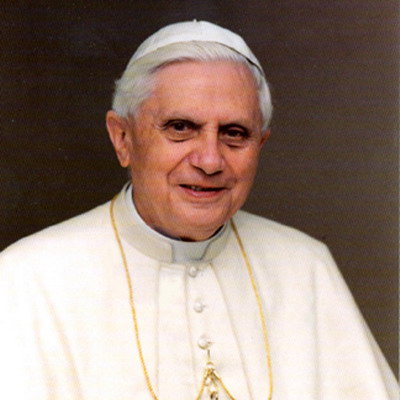
Pope Benetic XVI
VATICAN CITY — Pope Benedict received in audience today the secretary general of Vietnam‘s Communist Party, discussing issues of interest to the Vatican and Vietnam.

The Pope spoke with Nguyên Phú Trong on Jan. 22, who then met with Vatican Secretary of State Cardinal Tarcisio Bertone and Archbishop Dominique Mamberti, secretary for relations with states.

The Church leaders addressed with Trong their hopes of strengthening the existing fruitful cooperation between the two states.

Trong’s audience with the Pope was unusual in that he is a political leader and not a head of state with whom Pope Benedict would usually meet.

His visit with Pope Benedict is part of a wider European tour he is conducting with another nine members of the Communist Party of Vietnam. Trong met with Italian authorities on Jan. 21 and will end his European trip with a visit to London on Jan. 24.

A Vietnamese delegation from the office in charge of religious affairs visited the Vatican just two months ago.

The Holy See has not had full diplomatic ties with Vietnam since 1975, though in 2011 Archbishop Leopoldo Girelli, apostolic nuncio to Singapore, was appointed the Vatican‘s “official” to Vietnam.

“Most Vietnamese will say, ‘Well, this is just another meeting,' but it’s the first time a secretary general, the most powerful member of the Communist Party, visits the Pope,” Father Cuong Pham, a priest of Vietnamese descent, told Catholic News Agency Jan. 22.

“I think we should give them the benefit of the doubt that there is a sincere desire to improve relations and engage the Church with the Holy See,” he added.

Difficult Situation

Vietnamese Catholics, who constitute some 7% of the nation‘s population, often face persecution from the atheist government.

Father Pham, who works in Rome, said the situation for Catholics there remains difficult.

The situation has worsened because there is a big faction among members of the government that is hostile to religion as a whole, and they feel like the Catholic Church is becoming too prominent,” Father Pham noted.

“By limiting the Church’s role, they want to show that the government is in charge because they don’t think that any religious group should have that type of influence,” he added.

And, according to Father Pham, there are more tensions on a local level than on a government level.

“In several areas of the country, there have been cases of abuse on high levels, which even violate Vietnamese law and the constitution,” said the priest.


He also observed that meeting with the Pope could perhaps change public opinion about Vietnam‘s human-rights abuses.

“It makes the Vietnamese government look good and also that they are solicitous towards the Church and respecting freedom of religion, although that’s only on the surface, and we don’t know if it will translate into action,” Father Pham said.


“The average Vietnamese would hope that the Holy Father has used the opportunity to speak for them, who are voiceless.”
...Read more>>>

UK Prime Minister David Cameron challenged on Vietnam human rights

By staff writers - www.Ekklesia.co.uk
23 Jan 2013


UK Prime Minister David Cameron
UK Prime Minister David Cameron has been challenged to call on Vietnam’s government to halt its crackdown on freedom of expression and release all prisoners of conscience.

The call from human rights organisations, including Amnesty International, comes on the first day of an official visit to the UK by Nguyen Phu Trong, the General Secretary of the ruling Communist Party of Vietnam.

At the Prime Minister’s invitation, Nguyen Phu Trong is visiting the UK for two days. The visit marks the 40th anniversary of diplomatic relations between the two countries.

Amnesty International Researcher on Vietnam, Rupert Abbott, commented: “Mr Cameron should raise concerns publicly about Viet Nam’s appalling restrictions on free speech and the scores of human rights defenders who have been locked up there."

“He should demand the immediate and unconditional release of all prisoners of conscience – those imprisoned solely for the peaceful exercise of their right to freedom of expression," Mr Abbott continued.

Month after month, Vietnam’s government is locking up those who are simply speaking their mind about issues that are uncomfortable for the authorities – including bloggers, songwriters, lawyers, labour activists, members of religious groups and democracy activists.The UK should prioritise human rights in its growing relationship with Viet Nam.

“Mr Cameron should use the opportunity of Nguyen Phu Trong’s visit to speak up for those who the Vietnamese authorities have silenced,” the Amnesty spokesperson declared.

The official visit comes at a time when Vietnam’s government has stepped up its suppression of free expression, say critics.

Vaguely worded provisions in the country's penal code are being used to criminalise peaceful political and social dissent and criticism of the government.

In 2012 alone, dozens of peaceful dissidents were imprisoned, with many sentenced to long prison terms in trials that failed to meet international standards.

In September 2012 three popular bloggers including Nguyen Van Hai, known as Dieu Cay (the “peasant’s pipe”), were tried for “conducting propaganda” against the state and sentenced to between four and 12 years’ imprisonment.

The three are founding members of the Free Vietnamese Journalists’ Club and have used their blogs to promote human rights.

The crackdown has continued in 2013. On 9 January, 13 peaceful activists were sentenced to between three and 13 years’ imprisonment on charges of undertaking “activities aimed at overthrowing” the government. T

he Vietnamese authorities suspect them of having ties to the US-based political party Viet Tan, a group calling for peaceful reform in Vietnam, but which its government labels a terrorist organisation.
...Read more>>>

Barack Obama's Second Term: Balancing the Asia Pivot with Supporting Human Rights

by Joshua Kurlantzick
January 22, 2013

Mr. President, as you start your second term, you have made clear that you will continue the “pivot” to Asia, which includes moving military assets to the Asian theater, bolstering relations with Asian partners, and generally re-establishing the United States as the major Pacific presence. Your new secretary of state, John Kerry, is a longtime advocate of closer ties with mainland Southeast Asia. Within the State Department and Pacific Command, support for the “pivot” is strong as well.

In many ways, the pivot makes sense. Moving more U.S. military assets to Asia, and building closer ties with democratic partners like Australia, India, and South Korea, could help Asian nations feel more secure without necessarily sparking an arms race with China. The White House itself is not necessarily driving the pivot; Worried about China’s behavior, many Asian nations have looked to the United States as a balancer in the region.

But, Mr. President, as the past two months have shown, the excitement in Washington over the “pivot” has overshadowed some serious human rights concerns among many of the United States’ new friends. Your second administration needs to do a better job of continuing the pivot while demonstrating that Washington will make closer ties with autocratic Southeast Asian regimes contingent on rights improvements. I will list just a few examples here. I recently returned from Myanmar, a country which this past year you, for the first time, invited to join the U.S. and Thai-led multinational military exercise Kobra Gold. Some U.S. diplomats believe that military-military cooperation with Myanmar will grow so exponentially that by 2015 you will sign a comprehensive partnership with Naypyidaw. And indeed, Myanmar has changed significantly since the transfer of power from the military in 2010. Yet I saw, in Rakhine State, how a combination of local vigilantes and prodding from some in the security forces has led to wanton destruction of the Muslim Rohingya community, with tens of thousands driven out of their homes and large regions burned to the ground. Although the Rohingya disaster has been covered in some media, on the ground the situation actually is worse than described in most media reports, and the Rohingya are turning into Asia’s new “boat people,” fleeing en masse in rickety boats in hopes of getting to Malaysia. The Myanmar government also has upped its war against insurgents in northern Kachin State, allegedly bombing them with imprecise air strikes, and it remains highly unclear, from my conversations with diplomats and regional officers, whether President Thein Sein has control of his army commanders in the field.

Meanwhile, similar worries have arisen in Laos, a country virtually ignored by the United States since 1975 but courted by your administration, including with a visit to Vientiane by Secretary of State Hillary Clinton. But Laos’ rights abuses often get ignored, since the country seems, on the surface, to be so placid and slow-paced. Yet last month one of the most prominent activists in Laos, a former winner of the prestigious Ramon Magsaysay Award, suddenly went missing. As I noted in a previous blog, according to several news reports, he was held at a police post in the capital and then taken away in another truck which had stopped at the police post. His whereabouts remain unknown, even though, by the standards of political activism in neighboring states like Thailand, Malaysia, or the Philippines, he was hardly even critical of his government. This follows on other crackdowns in Laos. Last year, the call-in show News Talk, basically the only even semi-independent broadcast media in Laos, was abruptly forced off the air.

Finally, let’s look at Cambodia, Vietnam, and even treaty ally Thailand. As I noted in a piece for The New Republic, the administration has pushed for closer military-military ties with the Cambodian military (even paying for the son of autocratic prime minister Hun Sen to attend West Point), which has a record of assassinating domestic opponents. Former Defense Secretary Leon Panetta recently met with Cambodia’s Minister of Defense Tea Banh, yet in a comprehensive recent report, Human Rights Watch detailed how, over the past two decades, some three hundred people have been killed in political murders in Cambodia, many by soldiers or members of dictatorial Prime Minister Hun Sen’s personal guard. The Obama administration has also re-affirmed its longstanding alliance with Thailand, a country whose armed forces two years ago gunned down at least eighty civilian protestors in the streets of Bangkok. Under new Thai Prime Minister Yingluck Shinawatra, the Thai armed forces have hardly changed their tune: A group of soldiers, showed up, in full uniform, last week, outside the offices of a Thai media group, in an unsubtle attempt to threaten the group’s reporters, who had been critical of the armed forces—a highly inappropriate action for an army in what is supposedly a “democracy.” And in Vietnam, where cooperation with the Pentagon is moving the fastest, the government last week jailed fourteen activists and bloggers, continuing a crackdown on online dissent that has been building for the past three years.

In your second term, Mr. President, you certainly should not halt the pivot. It makes sense in terms of the dispersal of U.S. forces, it is desired by many Southeast Asian and Pacific nations worried by the increasing aggressiveness and opacity of the Chinese leadership, and it includes closer ties with important democratic partners like Australia, South Korea, Japan, and the Philippines.

But, as I noted in TNR, do not overrate your own ability to change nations in the region, and underestimate the brutality of some regimes you are dealing with. In your second term, take a harder look at what the pivot is actually getting from mainland Southeast Asian nations, and whether it is worth abetting such brutalities. There is thus far little evidence that mil-mil cooperation with the United States has changed the Cambodian armed forces, for example. And these smaller nations offer little strategic benefit. Even if Cambodia was “lost” to China—which already is Phnom Penh’s biggest donor and investor, giving Cambodia some $500 million in soft loans last year—would that be a serious blow to America’s presence in Asia? Not really. Nor would it be a great loss if Laos, which also has come under increasing Chinese influence—China provides extensive training for Lao soldiers, and is probably now Laos’ biggest donor—tilted more clearly to China. By contrast, Vietnam, despite its poor rights climate, could be a critical ally due to its large and professional military, deep-water harbors, growing interoperability with U.S. forces, and natural distrust of China.

Myanmar and Thailand are larger and more strategically located countries, and Thailand is a U.S. treaty ally. But Myanmar is unlikely to tilt toward China even if the administration had gone extremely slow in re-establishing military ties—the Myanmar generals began to engage with the West in 2010 in large part to reduce their dependence on China, which had become the dominant strategic, economic, and diplomatic force in Myanmar. So it is unlikely that, if the Obama administration goes slower on mil-mil cooperation in the second term until the Myanmar military is more clearly under civilian control, and has purged its worst offenders, the Myanmar government would suddenly cut off its engagement with the United States.

Thailand, also, would be unlikely to downgrade ties with the United States if the White House were to take a harder line toward the Thai military. Many in the current government of Prime Minister Yingluck Shinawatra have no love for the Thai military, since the armed forces removed Yingluck’s brother in a coup just six years ago. If any Thai government were to go along with the United States in taking a hard look at how its aid helps a military that repeatedly interferes in politics and uses excessive force on its own citizens, it would be this one.

Joshua Kurlantzick, Fellow for Southeast Asia
Expertise:Southeast Asia, China; Asian regionalism; public diplomacy; democratization in the developing world.

...Read more>>>

A cellphone revolution spells trouble for Vietnam’s communist rulers

by Andrew Lam

Republished from New America Media

Vietnam, a police state where freedom of expression can come with a multi-year prison term, is awash in cell phones. Whether for talking, texting or taking photos, Vietnamese are buying up mobile devices at a rate exceeding the country’s own population.

A sign of the communist nation’s rising affluence, it is also undermining the state’s monopoly on information.

For years Vietnam has been a major producer and exporter of cheap cell phones. In 2010, it reportedly exported $2.3 billion worth of phone sets. Two years later, that figure jumped dramatically to $8.63 billion, up 122 percent from a year earlier.

Now, with phones available for as little as $20, ordinary consumers are buying up sets that would otherwise have been bound for foreign shores.

According to the latest statistics reported by TechniAsia, there were 145 cell phones for every 100 Vietnamese in 2012. For a country “whose population is just over 90 million,” it adds, “that amounts to more than 130 million mobile phones.”

And buyers aren’t limited to the middle class. Everyone has them, from elementary school kids to impoverished pedicab drivers. Teenagers have them, too, of course. On motorcycles, Vietnamese chat on their mobiles while weaving dangerously through traffic with one hand on the handlebar. They don’t even turn them off in movie theaters. In cafes, at restaurants, they have a rude habit of talking to you while looking down to check and send messages.

For the government in Hanoi, which maintains a vigorous Internet firewall similar to the one in Beijing, it’s a troubling trend.

Because beyond the daily chitchat, Vietnamese are increasingly using their hand held devices to document and share scenes that authorities would prefer remain out of the public spotlight. Police wrongdoings are routinely reported, tweeted and shared online. Protests against police corruption and government land confiscation, and even against China’s expansionism in the South China Sea, are now organized by cell phones.

A case in point: The world-renowned venerable monk Thich Nhat Hanh, long exiled in France, was given permission to visit his homeland in 2005 and he decided to build a monastery. Called Bat Nha in Lam Dong province, the monastery grew quickly in fame and many young people flocked to it.

But the enthusiasm threatened local authorities, who feared a Vietnamese Falun Gong-style movement. The result was a government-sponsored mob attack in October 2009 that resulted in the injuries and arrests of monks and nuns, and eventually the demolition of the newly built temple and dormitories.

While mainstream news in Vietnam carried little information regarding the event, it was the cell phone that carried the day: Witnesses texted information and sent images of arrests and the demolition of the monastery. The story spread around the world.

Vietnam came out of the Cold War and ran fast and furious into the information age. Once upon a time, owning a fax machine could get you arrested. When it came to information manipulation and control, the communist regime once ran an impeccable machine.

But no more. Internet access went from 200,000 users in 2000 to 30,802,000 users in 2012. Facebook entered the country last year and has quickly captured 10.5 million users, or nearly 12 percent of the population.

The growth of the Internet is endangering the government,” Le Quoc Quan, an internationally renowned lawyer and democracy activist whose popular blog pushes for a multiparty system and more human rights, told the Associated Press last year. “People can actually read news now. There is a thirst for democracy in our country.” Vietnam convicted 14 bloggers and democracy activists last week for plotting to overthrow the governing, and some received 13 years jail term. Quan was arrested not long after his interview.

More and more people are blogging their frustrations and anger. But whether or not the general population does in fact thirst for democracy and want revolution is not clear. It’s a citizenry that has no organized opposition, no charismatic leadership that could challenge the status quo, and no serious conversation on a new national direction.

And despite the urgings of leading activists like Dr. Nguyen Dang Que, who before his arrest in 2011, posted online a call for young people to use their cell phones to make a “clean sweep of Communist dictatorship,” it’s far from certain that ordinary cell phone users perceive the new technology as a potential tool for revolution ala Arab Spring.

What is clear, however, is that the wind of change is blowing. There’s a growing collective discontent against injustices and corruption, and the new communication architecture has loosened the tongue of the general population. And the more informed, the more restless they become. Whether they know it or not, by sharing and swapping information on a national scale the Vietnamese are making revolution happen, one text at a time.

New America Media editor, Andrew Lam is the author of ”Perfume Dreams: Reflections on the Vietnamese Diaspora” (Heyday Books, 2005), which won a Pen American “Beyond the Margins” award and where the above essay is excerpted, and “ East Eats West: Writing in Two Hemispheres. His next book, “ Birds of Paradise Lost” is due out March 01, 2013. He has lectured and widely at many universities.
...Read more>>>

Clinton highlights concern over missing Lao activist

US Secretary of State Hillary Clinton
WASHINGTON (Reuters) - Secretary of State Hillary Clinton called on Laos on Thursday to mount a transparent investigation into the disappearance of a prominent activist who rights groups believe has been taken into government custody.

"We are deeply concerned about the well-being of Lao civil society leader Sombath Somphone, who disappeared one month ago," Clinton said in a statement.
"We call upon the Lao government to pursue a transparent investigation of this incident and to do everything in its power to bring about an immediate and safe return home to his family."

Clinton's personal statement represented a significant increase in pressure from Washington over the case of Somphone, who rights group say disappeared on December 15 in the Lao capital, Vientiane, after being stopped by police while driving his Jeep from the development agency he founded.
Lao Activist  Sombath Somphone

New York-based Human Rights Watch said in a statement last month that circumstances surrounding the case including security camera footage indicate Lao authorities took Somphone into custody although Lao officials have said they do not know where he is or who was responsible for his disappearance.

Somphone, 60, received the Ramon Magsaysay Award for community leadership in 2005 and worked to promote education and development in poverty-stricken Laos. The award is often described as Asia's equivalent of the Nobel Prize.

The landlocked communist country has little tolerance for dissent and last month expelled the director of a Swiss development organization for criticizing the country's one-party regime in a letter to donors.

The Lao Ministry of Foreign Affairs said last month that traffic police had stopped Sombath in the course of routine checks but unknown men had taken him away shortly after that.

"His disappearance has generated a tremendous amount of concern from his family, friends and colleagues around the world. We urge his immediate return home and send our thoughts and prayers to his family and loved ones," Clinton said.

Clinton last July became the first U.S. secretary of state to visit Laos since 1955, spending four hours there meeting officials and highlighting the threat of unexploded ordinance left over from U.S. bombing associated with the Vietnam war.
...Read more>>>

Overseas Vietnamese Call for FREE VIETNAM

Overseas Vietnamese Call for FREE VIETNAM
Produced by Asia 71 Video Trieu Tim


...Read more>>>

The impacts of Xayaburi dam in Laos on the Mekong River

Bangkok Post Online - January 13, 2013.

BANGKOK - When ministers from the four member countries of the Mekong River Commission and donors meet in Luang Prabang, Laos this week, the future role of the agency will be on the table.

Questions about the effectiveness of the Mekong River Commission, set up in 1995 to jointly manage sustainable development, have been raised by Laos' decision in November to go ahead with the US$3.5-billion (105 billion baht) Xayaburi dam project.

The decision came despite concerns among member governments, environmental groups and donors about the dam's downstream impact on fish migration and sedimentation flows, which could affect about two million people dependent on the river for their livelihoods.

At the commission's last ministerial meeting in December 2011, Cambodia, Thailand and Vietnam called for a delay to allow further studies on the environmental impact of the dam, the first to be built on the Lower Mekong. China has built four dams on the upper portions of the river already.

Ten more dams are planned on the Lower Mekong, mostly in Laos.

Laos insists that it has fulfilled the commission's consultation requirements.

"We agreed to do a comprehensive study on the project which may take 10 years, because it is related to many things. It was never just related to Xayaburi," said Viraphonh Viravong, vice minister of energy and mines.

The joint venture between the Lao government and Thai companies also redesigned the dam's fish ladder and sluice gates for sediment flows, completing its perceived obligations to the commission.

Laos has always argued the 40-metre high dam is a run-of-river design, which will have minimum impact on water flow.

Cambodia and Vietnam, two downstream countries that stand to suffer the most from the dam, have tempered their reaction to Xayaburi.

"We wish Laos would continue its study on environmental impacts and to work up the final design of Xayaburi dam, and work with Vietnam, Cambodia and Thailand on the comprehensive, in-depth study on accumulative environmental and socio-economic impacts of all the hydropower projects in the Mekong River mainstream," the Vietnamese government said.

Cambodia has been similarly diplomatic.

"Laos decided to go forward with Xayaburi and has committed to continue carrying out additional studies," said Te Navuth, secretary general of the Cambodia National Mekong Committee.

Neither country has requested that the Xayaburi issue be raised at the Mekong River Commission meeting scheduled this week.

Thailand, whose Ch Karnchang Public Co Ltd is the dam's major contractor and will be the major buyer of the electricity generated, has endorsed the project, to the dismay of some Thai activists.

"The post-war Lao alliances to Cambodia and Vietnam have been taken over by Thai and Chinese corporate interests," said Kraisak Choonhavan, a former senator who has taken a lead in organising Thai opposition to the dam.

The governments now ruling Laos, Cambodia and Vietnam were allies in the Indochina wars against the US military.

It is bad timing for Laos that the Luang Prabang meeting comes when the communist government is under international scrutiny for the disappearance of activist Sombath Somphone, last seen being detained at a police checkpoint on Dec 15, 2012.

Sombath had spoken out at several public forums against the dam.

"The cost of this Xayaburi project to Laos's image is tremendous," Mr Kraisak said. "And the disappearance of Sombath has further eroded its credibility as a country that respects basic human rights."

Member countries may be reluctant to question the Xayaburi dam, but donors whose contributions account for the lion's share of the commission's budget are expected to raise objections.

"The main goal of the donor community is to reconfirm that the Mekong River Commission is the platform, the only multilateral architecture, responsible for managing the Mekong and we want to see a central role for it," said one Western diplomat. "We don't want to see it sidelined."

They are hoping that future decisions on hydropower projects will take into account the concerns of all parties.

"If decision-making continues to occur outside of the MRC, the institution will soon lose its legitimacy and 300 million dollars of international donor support to the commission will be wasted," said Jian-hua Meng, sustainable hydropower specialist at the World Wildlfie Fund.
...Read more>>>

Vietnam Hires 1,000 Bloggers to Attack Online Dissidents

By Nga Pham
BBC News, Hanoi


Vietnamese propaganda officials have admitted deploying people to engage in online discussions and post comments supporting the Communist Party's policies.

The party has also confirmed that it operates a network of nearly 1,000 "public opinion shapers".

They are assigned with the task of spreading the party line.

The tactic is similar to China's model of internet moderators who aim to control news and manipulate opinion.

'Political opportunists'

Hanoi Propaganda and Education Department head Ho Quang Loi said that the authorities had hired hundreds of so-called "internet polemists" in the fight against "online hostile forces".

While the exact number of these activists is unknown, Mr Loi revealed that his organisation is running at least 400 online accounts and 20 microblogs.

Regular visitors on popular social media networks in Vietnam such as Facebook have long noticed the existence of a number of pro-regime bloggers, who frequently post comments and articles supportive of the Communist Party.

The bloggers also take part in online discussions, where they fiercely attack anybody who they see as critical of the regime.

On a recent BBC Vietnamese Facebook wall - linked to a story about measures to clamp down on dissent - one such blogger asked why it was that the US "gave themselves the right to criticise other nations on human rights".

"They should have a look at their own record!" the blogger stated.

Another post criticises pro-democracy campaigners.

"The so-called democracy activists and intellectuals are becoming more and more ridiculous. They have shown their true colour as political opportunists. Their despicability has no bounds," it says.

Mr Loi said such bloggers helped a great deal in stopping negative rumours and had blocked online calls for mass gatherings in the city.

Vietnam's capital saw at least dozen public protests in 2011, but the number was greatly reduced last year.

The authorities also employ a force of 900 "public opinion shapers" who help talk up government policies and promote the party line across the country.

It is not clear whether these operatives, and the bloggers, are on official payrolls.

But they are being praised by officials as a sophisticated and effective tool in controlling public opinion.
...Read more>>>

U.S Embassy's Statement on Conviction of 14 Bloggers in Nghe An

Statement on the Conviction of 14 Redemptorist Bloggers in Nghe An Province

Jannuary 9, 2013

We are deeply troubled by reports that the People’s Court of Nghe An Province convicted 14 Catholic Redemptorist bloggers on charges related to their exercise of their rights to freedom of expression. These bloggers were convicted of “subversion of the administration” (Article 79) and sentenced to prison terms ranging from 3-13 years.

These convictions, along with the detention of human rights lawyer and blogger Le Quoc Quan since December 27, 2012 and the upholding of sentences against bloggers Nguyen Van Hai (also known as Dieu Cay), Ta Phong Tan, and Phan Thanh Hai, are part of a disturbing human rights trend in Vietnam.

The government’s treatment of these individuals appears to be inconsistent with Vietnam’s obligations under the International Covenant on Civil and Political Rights, as well as the provisions of the Universal Declaration of Human Rights relating to freedom of expression and due process. We call on the government to release these individuals and all other prisoners of conscience immediately.
...Read more>>>

Vietnam Jails More Bloggers

By Luke Hunt - The Diplomat
January 11, 2013

Democracy activists convicted of plotting to overthrow the Vietnamese government were sentenced to jail terms on Wednesday January 9,2013 at a court in Nghe An province
The Vietnamese government has jailed 14 people for terms of three to 13 years for ‘plotting to overthrow the state,’ outraging human rights groups who say all were simply social justice campaigners and citizen journalists.

Most were Roman Catholics with links to Viet Tan, or the Vietnam Reform Party, a U.S.-based organization outlawed by Hanoi as a militant group. Charges also included the spreading of anti-state propaganda.

New York-based Human Rights Watch said the defendants and alleged ringleader Ho Duc Hoa were imprisoned for exercising their rights in activities which should never have been criminalized. Meanwhile, the U.S. embassy in Hanoi issued a statement criticizing the sentences and also saying the 12 men and 2 women were exercising their right to freedom of expression.

Nearly all were bloggers or students.

Viet Tan rejected the allegations and the court’s verdict saying: “The trial held in the city of Vinh, central Vietnam, took place in a climate of political repression even though the proceedings were billed by officials as being open.”

“Authorities mobilized hundreds of uniformed and plainclothes security police to block supporters and relatives of the defendants from gathering outside the court.

“Dozens of supporters — including elderly women and Catholic clergy — were physically attacked by police and temporarily detained,” it said. “Viet Tan rejects the fabrications peddled by the communist court to rationalize the ‘subversion’ charges.”

Verifying claims in Vietnam is not easy and often fraught with problems. It remains a country where the authorities hide the embarrassing at all costs and dissent is not tolerated. Vietnam is also facing an economic paralysis brought on by central government policies — and higher unemployment and lower standards of living will only raise the volume for the government’s critics.

Ordinary Vietnamese increasingly rely on bloggers for information that the heavily censored and sanitized local press are unable to deliver on.

Last month an appeals court upheld a 12 and 10 year sentence meted out to two prominent bloggers jailed in September, which were also “anti-state propaganda” charges.

These were not the first to be arrested under section 88 of the criminal code in regards to propaganda.

These convictions, along with the detention of human rights lawyer and blogger Le Quoc Quan since December 27, 2012 and the upholding of sentences against bloggers Nguyen Van Hai — also known as Dieu Cay — Ta Phong Tan, and Phan Thanh Hai, are part of a disturbing human rights trend in Vietnam,” the U.S. embassy statement said.

In calling for their release the U.S. also noted their treatment appeared to be inconsistent with Vietnam’s obligations under the International Covenant on Civil and Political Rights, as well as the provisions of the Universal Declaration of Human Rights relating to freedom of expression and due process
...Read more>>>

China warns Vietnam over South China Sea islands

By ZeeNews.com January 2,2013

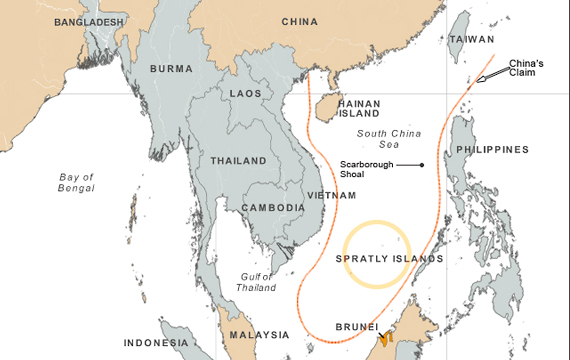
Beijing: Deploying its maritime vessels for patrolling in the disputed South China Sea, China has asked Vietnam not to implement its new maritime law, affirming sovereignty over the contested islands and cautioned Hanoi that the move would escalate bilateral tensions.

Chinese Foreign Ministry spokesperson Hua Chunyang in a statement here urged Vietnam to refrain from taking any actions that complicate and escalate issues between the two countries, as the Vietnamese maritime law came into effective from yesterday.

Hua stressed China has indisputable sovereignty over the islands called by China Xisha and Nansha Islands and Paracel islands by Vietnam.

"Any claim raised by any other country and any action taken by any other nation to territorial sovereignty over the islands and waters are illegal and invalid," Hua said, adding China is deeply concerned about the negative impact of the implementation of the law.

In June, the Vietnam National Assembly passed the "Vietnamese Law of the Sea," describing the Islands as being within Vietnam's sovereignty and jurisdiction.

Consequently Vietnam had set up a fishery bureau with powers to maritime patrol, check the ships of other countries and investigate any violations.

To counter Hanoi's move China's Hainan Province passed a regulation related to ocean security, affirming China's stand to protect its maritime security.

Under this, several measures can be taken against foreign ships that illegally enter China's territory.

In November last year, the local legislature of China's Hainan authorised provincial border police to board or seize foreign ships that illegally enter the province's waters and order them to change course or stop sailing from January 1.

Yesterday, Chinese state-run Xinhua news agency reported China's marine surveillance ships began patrolling the South China Sea implementing the order authorising its border Police to board and search ships entering the area considered as its territorial waters.

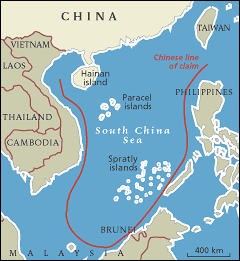
China's State Oceanic Administration said its vessels Haijian 75 and Haijian 84, aided by the surveillance aircraft B-3843 patrolled waters near the Beibu Gulf of the South China Sea, where Vietnam recently complained of harassment of Chinese vessels obstructing its survey ship. China virtually claims ownership to the entire South China Sea.

Besides Vietnam, the Philippines, Malaysia, Brunei and Taiwan have disputes with China over the disputed islands in the South China Sea as well as the extent of territorial waters. The Philippines and Vietnam have raised objections over the maps printed in China's e-passports claiming the sovereignty over the disputed areas.
...Read more>>>