Banner Line

On June 16,2013 Vietnamese police defrocked/tortured Khmer-Krom monk Ven. Ly Chanda of Prey Chop Temple in Lai Hoa, Vinh Chau, Soc Trang province. June 20,2013 Venerable Thach Thuol and Abbot Temple Lieu Ny of Ta Set temple (Soc Trang-Khleang province) defrocked and imprisoned in Prey Nokor (Saigon) city by the Viet authorities. In Phnor Dach (Cau Ngang) district, Preah Trapang/Tra Vinh) Khmer Krom prohibited from watching Cambodian TV signals.

Vietnam's Talk/Fight Strategy in play on Human Rights Negotiations

By Michael Benge, The AmericanThinker
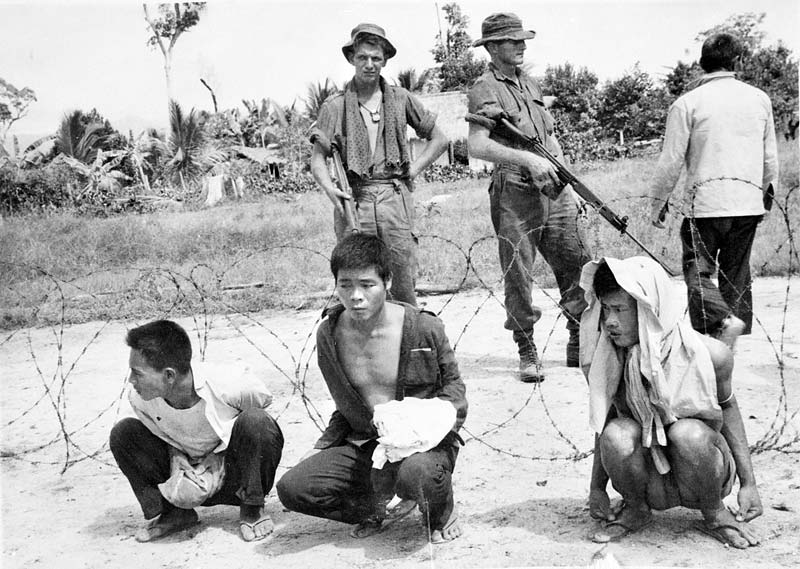
For decades, the Vietnamese communists' negotiating strategy has been "Talk/Fight" -- first in dealing with the French, then with the U.S. during the Vietnam War, and now in the current U.S.-Vietnam Trans-Pacific Partnership (TPP) negotiations. The "Talk/Fight" strategy is to engage their opponent in negotiations, stalling for time, all the while replenishing, repositioning, and resupplying their troops, as they gain ground and concessions. According to Ernest Bower, senior advisor on Southeast Asia at the Center for Strategic and International Studies, "[t]he American government admires Vietnam's strategic thinking."

The TPP includes nine other countries besides Vietnam and is touted as a new-generation, high-standard trade agreement of the 21st century. The finalization and implementation of this trade deal would give a huge boost to U.S.-Vietnam economic relations, granting Vietnam even greater access to its largest export market -- the U.S.

While the State Department continues to meander and vacillate in its negotiations regarding human rights abuses, communist henchmen have ratcheted up the repression in Vietnam. As a distraction, the Vietnamese communists are playing the need-to-contain-China card, while seeking lethal weapons from the U.S., supported by both of Vietnam's major advocates -- Senator John McCain and Secretary of State John Kerry.

American TPP negotiators are mouthing toothless concerns about Hanoi's ongoing gross human rights abuses, so one can assume that stipulations on the improving freedoms for the Vietnamese people will be incorporated into the agreement before it is approved. However, history shows that the Vietnamese communists have never lived up to any agreement with the U.S., so it is reasonable to expect the communist henchmen to go merrily on their way, continuing their repression, while thumbing their noses at the U.S.
The TPP is a done deal if one is to believe Scott Busby, the acting deputy assistant secretary of state for democracy, human rights and labor, who recently stated in Falls Church, VA, "The United States and Vietnam continue to improve economic and trade ties, including through the Trans-Pacific Partnership ... free trade agreement."

Vietnam is a police state where one in six working people are employed either full- or part-time in the massive state security network.

"Plus ça change, plus c'est la même chose." (The more things change, the more they remain the same.)

Here are just a few human rights abuses committed recently by communist Vietnam:

September 3rd: It started out as a peaceful protest until Vietnamese police attacked hundreds of Catholics protesting in front of their church in My Yen Parish, Nghe An Province, using live ammunition and throwing grenades. Protesters were demanding the release of two parishioners arrested in June and held without charges. An unknown number of people were rushed to hospital with critical head, hand, stomach, and neck injuries after being beaten by police who tried to stop people from receiving treatment.

August 1st: After three years' imprisonment in Gia Lai province and suffering continual beatings, Protestant pastor Pyap Rolan died from starvation after being denied food and water. Pyap was being persecuted because he was a house church pastor and because his father Bre Puih had escaped and fled to the U.S.

August 1st: House church members Beu Siu and Pet Ksor from Plei Pong Village Gia Lai province were arrested by police. Pet was beaten and released, but Beu's fate is unknown.

August 19th: House church members Kla Rmah, Sop Rahlan, and H'Bleng Rmah (female) from Plei Sur village, Gia Lai province, were arrested by police and beaten, Sop so severely that he cannot walk. Kla remains in jail, while the other two were released. Reports about above came from relatives in North Carolina.

March 17th: Hmong Christian Church Leader Vam Ngaij Vaj of Cu Jut District, Dak Nong Province, was tortured with electrical batons and died of beatings while in police custody, according to sources.

April 12th: Hoang Van Ngai, an elder of the Evangelical Church of Vietnam, also from Dak Nong Province, died of beatings, according to his brother, who was imprisoned in an adjacent cell. Additionally, "over 300 witnesses saw Ngai's body with bruises, deep cuts and broken skull."

According to its recent report, the U.S. Commission on International Religious Freedoms (USCIRF) said that Vietnam, under one-party communist rule, is expanding control over all religious activities, severely restricts independent religious practice, and represses individuals and religious groups it views as challenging its authority. "The Vietnamese government uses a specialized religious police force and vague national security laws to suppress independent Buddhist, Protestant, Hoa Hao, and Cao Dai activities, and seeks to stop the growth of ethnic minority Protestantism and Catholicism via discrimination, violence and forced renunciations of their faith."

Internet freedom has gone from bad to worse in Vietnam as an online censorship law known as "Decree 72" went into effect this month, allowing people to post online only personal information. The new law punishes anyone who discusses current affairs or news sensitive to the life of the state. It bans bloggers and users of social media from quoting, gathering, or summarizing information from press organizations or government websites. In addition, internet providers are tasked with blocking stories that criticize Vietnam or that could endanger "national security." In 2013 alone, Hanoi has arrested more than 40 activists for these so-called "crimes against the state."

While the Obama administration vacillates, the European Parliament recently strongly condemned the violations of human rights and of freedom of expression, religion, and assembly in Vietnam, including the political intimidation, harassment, assaults, arbitrary arrests, heavy prison sentences, and unfair trials brought against political activists, journalists, bloggers, dissidents, and human rights defenders. The condemnation included the "severe religious persecution" against Catholics as well as "non-recognized" religions such as the Unified Buddhist Church of Vietnam and the Protestant churches.

Ironically, Vietnam is bidding for a seat on the United Nations Human Rights Council for 2014-2016.

White House Visit

As all eyes and ears are turned to President Obama and Syria, nearly everyone has forgotten Obama's White House meeting in July with Vietnam's President Truong Tan Sang, and the ridiculous utterings of both men. Sang peddled the lie that the communist nation's founder, Ho Chi Minh, was a nationalist inspired by the Declaration of Independence and Thomas Jefferson. Sang and the other communist Vietnamese leaders adhere to Joseph Goebbels' "Big Lie" postulate -- people will believe a big lie sooner than a little one, and if you repeat it often enough, people will eventually believe.

Not to be outdone by his communist counterpart, President Obama agreed that the hardcore communist revolutionary Ho Chi Minh was inspired by the U.S. Declaration of Independence and Constitution, as well as the words of Jefferson and our founding fathers. He went on to say that both countries share a mutual admiration for Thomas Jefferson and our founding principles.

Au contraire, mon président. The Vietnamese regime's creator was not Jefferson's God, but Ho Chi Minh himself, an unscrupulous Comintern agent paid by Moscow whose loyalty was only to the World Communist Movement. And our founding principles did not include the murder of tens of thousands our people, as did theirs. Rather than "all men are created equal," Sang's regime is closer to George Orwell's satirical allegory of communism in "Animal Farm," where some animals are much more equal than others.
Michael Benge spent 11 years in Vietnam as a Foreign Service officer and is a student of South East Asian politics. He is very active in advocating for human rights, religious freedom, and democracy for the peoples of the region and has written extensively on these subjects.
...Read more>>>

Cambodian Tweets Lead the News

By Luke Hunt, September 18, 2013, The Diplomat

Following the protests in Cambodia from abroad this week was astonishing. On Twitter, Facebook and email, the coverage had immediacy, clarity and a ubiquitous presence that even live television could not compete with, even when seen from Kabul.

From the outset, when protesters began arriving at Freedom Park, the scuffles, tear gas and water cannon – and sadly the death of Mao Sok Chan during a confrontation after the rally had ended – the coverage was slick and on par with great coverage by any wire service in its heyday.

Unfortunately, however, social media geeks who believe the role of iReporter or citizen journalism is a fundamental cornerstone of digital media have gotten it wrong.

What emerged was hundreds of protesters armed with smart phones throwing live accounts onto the Internet where they were disseminated fast by foreign journalists from local and international publications who were not working in unison. Far from it, they were competing for the best line.

Important information about roadblocks, crowd movements, speeches, violence and confrontation were tweeted in one-liners, details and photos were Facebooked, and personal evidence observed that day was emailed privately in a telling and professional manner.

Largely absent were the shrill and sometimes hysterical voices of activists turned civilian reporters or the hardline partisan politicians who like to hear and swamp the Internet with their own pontifications. They were simply sidelined by genuine journalists covering the event.

In short, I didn’t need to see it on CNN or BBC.

But on a much wider front the professionalism that is emerging in the digital era of journalism is a serious challenge for Cambodian authorities whose failure to reconcile themselves with the realities of this generation warrant comparisons with those saintly women of old who disfigured themselves in order to protect their chastity.

In the run-up to the July 28 election, powerful factions within the Cambodian People’s Party (CPP) wanted Facebook banned. The same could probably be said for the myriad of social media sites similar to Facebook, if the bureaucratic boffins could just figure out how they work.

There were at least two attempts to block social media websites, but in the end greed won out. Too many business interests with political connections that rely on Facebook and the Internet for income carried the day, much to the unintended delight of those at Sunday’s protest.

Had those responsible for security at the protests been tuned in to the very product many would have banned, they just may have realized that crowds were dispersing by early evening, although the roads were clogged and it was difficult getting home. That was the time to pull the police with loaded guns back to barracks. If they had done so, much of the violence and bloodshed in the evening might have been avoided.

Luke Hunt can be followed on Twitter at @lukeanthonyhunt.
...Read more>>>

Stifled Southeast Asian Voices: NGOs Unite Against Criminalization of Free Expression on the Internet

11 September 2013 (FIDH)


As concerns grow in Southeast Asia over the use of national security, anti-terrorist and defamation laws to limit freedom of expression on the Internet, a coalition of international and local NGOs and activists from Vietnam, Thailand and Cambodia urged governments to stop using vague legislation based on ill-defined concepts such as “national security”, “sovereignty” or “lèse-majesté” to intimidate, harass and imprison independent voices. Speaking at an event in Geneva, which coincides with the 24th session of the UN Human Rights Council, FIDH, IFEX, Article 19 and PEN International united to call for the urgent revision of these laws to bring them into line with international human rights standards.

Independent and dissenting voices, including bloggers and netizens, journalists, activists and human rights defenders, have increasingly been subjected to repression in Southeast Asia.

In Vietnam, bloggers and journalists, such as Điếu Cày and Phan Thanh Hải, have been jailed for peacefully advocating for reform, denouncing power abuses and reporting on human rights. The recently adopted Decree 72 banned sharing news stories on social media and quoting news from press agencies. “Vietnam is pursuing the worst ever crack-down on pro-democracy activists and bloggers. At least 48 dissidents were convicted in 2013 alone”, said Vo Van Ai, President of the Vietnam Committee on Human Rights, who was sitting as a panelist today.

The Thai authorities have mostly been using the lèse-majesté law (Article 112 of the Criminal Code, which punishes any word or deed which “defames, insults or threatens the King [...]”) and the 2007 Computer Crimes Act to lock up journalists and critics. The most notorious case is that of Somyot Prueksakasemsuk, who was sentenced to ten years in prison for authorizing the publication, as editor, of two articles that were considered insulting to the royal family. Ironically, Somyot was arrested just a few days after launching an online petition calling for a review of Article 112. “In its commitment to cooperate with the UN, Thailand needs to go beyond words, immediately release Somyot and protect the right to freedom of expression of all citizens”, said Somyot’s wife, Sukanya.

The Cambodian government has also taken steps towards seriously limiting the use of the Internet. In 2012, it started drafting a cyber law, whose official aims included preventing “ill-willed people” from “spreading false information”. This draft law has yet to be publicly circulated, and there are serious concerns that it will mirror the restrictive laws within the region. Websites and blogs critical of the government are routinely blocked by Internet service providers on the basis of “instructions” from the government. “I believe in the power of the Internet to spread information and opinions. The Internet should always be free and uncensored”, said Ramana Sorn, Program Coordinator at the Cambodian Center for Human Rights and a panelist today.

“Authorities in Vietnam, Thailand and Cambodia have been manipulating vague, malleable concepts to crack down on dissent and stifle independent voices online. They have done so in complete violation of international law”, said FIDH, IFEX, Article 19 and PEN International. “We call on them to immediately and unconditionally release all bloggers, journalists, activists and human rights defenders detained for peacefully expressing their opinion, and to stop harassment and intimidation of free voices. Everyone has a right to discuss―and challenge―government policies and matters of public interest”.

Background information:

Thailand, despite commitments made during its Universal Periodic Review (UPR) in 2011, has failed to improve its freedom of expression record during its term as Human Rights Council member, which it will complete on 31 December 2013. Vietnam is running as a candidate for membership in the Human Rights Council (2014-2016) and will be reviewed in the framework of the UPR in early 2014, at the same session in which Cambodia will be reviewed.
...Read more>>>

Vietnam's social media censorship takes effect

CBC News Posted: Sep 1, 2013

A controversial internet law prohibiting Vietnamese citizens from posting any content online that harms national security or opposes the state took effect Sunday.

The new law, dubbed Decree 72, limits what Vietnamese citizens can post on their online personal pages, including Facebook, Twitter and blogs.

Decree 72 does not elaborate on what constitutes a breach.

The law also demands all foreign websites maintain at least one server in Vietnam, which would give the government greater control of content.

Media freedom watchdog Reporters Without Borders criticized the decree before it became law, calling it "the harshest offensive against freedom of information" in the country since its prime minister signed a tough round of sanctions against media in 2011.

The organization urged nations to impose heavy sanctions against Vietnam if the country allowed the decree to become law.

Vietnam has been criticized by the United States and leading internet firms like Google and Yahoo! over the controversial internet decree, which it said had been misunderstood and did not breach human rights.

Reporters Without Borders has previously labelled Vietnam an enemy of the internet and ranks the nation 172 out of 179 in its press freedom index. Vietnam jails the second most bloggers and cyber-dissidents, according to the organization — with 35 people currently imprisoned.
...Read more>>>

Freedom Online Coalition Joint Statement on the Socialist Republic of Vietnam's Decree 72

Press Statement
Marie Harf
Deputy Spokesperson, Office of the Spokesperson
Washington, DC
August 26, 2013


The Freedom Online Coalition is deeply concerned by the announcement of Vietnam’s new Decree 72, which will impose further restrictions on the way the Internet is accessed and used in Vietnam when it comes into effect September 1. For example, Decree 72 restricts online information flow and limits the sharing of certain types of news and other speech. Decree 72 appears to be inconsistent with Vietnam’s obligations under the International Covenant on Civil and Political Rights, as well as its commitments under the Universal Declaration of Human Rights.

Decree 72 risks harming Vietnam’s economy by constraining the development of businesses in Vietnam, limiting innovation, and deterring foreign investment. An open and free Internet is a necessity for a fully functioning modern economy; regulations such as Decree 72 that limit openness and freedom deprive innovators and businesses of the full set of tools required to compete in today’s global economy.

The Freedom Online Coalition notes that resolution 20/8, adopted by consensus by the UN Human Rights Council in July 2012, confirms that human rights apply online as well as offline. The Freedom Online Coalition calls on the Vietnamese government to revise Decree 72 so that it promotes the ability of individuals to exercise their human rights, including the right to freedom of expression.

The Freedom Online Coalition is a cross-regional group of 21 governments that collaborate to advance Internet freedom worldwide. The Coalition provides a forum for like-minded governments to coordinate efforts and work with civil society and the private sector to support the ability of individuals to exercise their human rights and fundamental freedoms online.

The Freedom Online Coalition was formed at a conference hosted by the government of the Netherlands in 2011, and held further meetings hosted by Kenya in 2012, and Tunisia in 2013. The government of Estonia, chair of the Coalition, will host the next conference in spring 2014.
...Read more>>>

Anthropologist Offers Insight Into Plight of Khmer Krom

By Michelle Vachon - Cambodia Daily August 26,2013

Cambodia Police beating Khmer Krom Monks in Phnom Penh, Cambodia in 2007
During their ongoing war against Vietnam in the 1970s, the Khmer Rouge attacked the Vietnamese province of An Giang along the border and brought back to Cambodia about 20,000 people from Vietnam’s Khmer minority known as Khmer Krom.

This mass migration, which mainly took place in 1977 and 1978, remains one of the untold stories of the Pol Pot regime, said Australian anthropologist Philip Taylor on Sunday.

Was this operation meant as territorial expansion, another assault against Vietnam or a rescue mission of Khmer brothers?

Actually, it was none of the above, according to Mr. Taylor.

“This was a case of mass abduction [by a regime] striving to control,” he said.

At the time, there were around 100,000 Khmer Krom in that province, and the Khmer Rouge did not want to let such a large Khmer population—and one living along the Cambodian border—be autonomous, Mr. Tay­lor said.

In addition, the Khmer Rouge needed workers in their forced-labor camps where tens of thousands of Cambodians had already died of starvation and ill treatment, he added.

So the Khmer Rouge brought Khmer Krom to Cambodia and put them to work, treating them as “non-pure Khmer” always suspected of Vietnamese sympathy because of their origins, he said.

Mr. Taylor, who has been researching the Khmer Krom for nearly 15 years, will give a lecture at Meta House on Tuesday on the Khmer Rouge’s forceful importation of the Khmer Krom.

A research fellow with the Australian National University in Canberra, he is working on a book about the effects of Cambodia’s conflicts of the 1970s and 1980s on Vietnam’s Khmer minority, effects that continue to this day. The conference is organized by the social-science network Human Sciences Encounters in Phnom Penh.

Mr. Taylor has interviewed thousands of Khmer Krom during his numerous visits to Vietnam and the five years he lived in the Mekong Delta. In addition, he spoke to 100 Khmer Krom from An Giang province who had direct experiences of the Khmer Rouge “mass importation,” and discussed the era with both Khmer Krom and Vietnamese officials.

What emerges from his research, Mr. Taylor said, is that the Khmer Krom had been under suspicion on both sides of the border.

While some Khmer Krom may have supported the Khmer Rouge, many who were brought to Cambodia did so against their will, he said.

But when they returned to An Giang province after the 1979 Khmer Rouge defeat at the hands of Cambodian and Vietnamese forces, the Viet­nam­ese authorities mainly viewed them as Khmer Rouge fleeing Cambodia, and therefore enemies of Vietnam, Mr. Taylor said.

The biggest reprisals came from the Vietnamese population that recalled the Khmer Rouge massacres of Vietnamese villages: They made it difficult for returning Khmer Krom to claim their rights to residency and the land they had previously owned, he said.

In the meantime in Cambodia, the Khmer Krom have often had their Khmer identity questioned, and have faced discrimination, Mr. Taylor said.

“In my extensive travel around the Mekong Delta, I found that the Khmer Krom had suffered not only at the hands of the Vietnamese state but also at the hands of the Cambodian state.”

Mr. Taylor’s conference will start at 7 p.m. Tuesday.
...Read more>>>

Cambodia’s Top Court Says Key Election Records Open for Review

RFA - August 22,2013

Cambodia’s election authorities may be ordered to check key voting data to investigate opposition claims of widespread election irregularities in recent national polls, the country’s highest court ruled Thursday.

The Constitutional Council also said that it could hold public hearings on the hotly-contested July 28 election that has resulted in a political deadlock and tensions in the capital.

The court made the statement as it reviewed complaints against preliminary results released by the National Election Committee (NEC) giving Prime Minister Hun Sen’s Cambodian People’s Party (CPP) a victory.

The results have been challenged by the main opposition Cambodia National Rescue Party (CNRP) which claims massive election irregularities, including one million voters delisted from the electoral rolls.

Security packages

The Constitutional Council said in a statement that it could call for sealed packages containing original tally sheets collected from polling stations on election day to be opened, in order to allow results returned later in the vote-counting process to be checked against the primary data.

The NEC has rejected complaints by the CNRP and said it would not open the security packages without solid evidence of serious irregularities.

The Constitutional Council, which is the final arbiter of the contested election results, said that based on the Election Law, it “can order the NEC to open security packages in order to verify votes,” according to the statement.

The CNRP has called for U.N.-backed investigation into irregularities and a full investigation into voting data, saying the CPP and NEC colluded to deny votes for the CNRP.

Ensuring safety

CNRP President Sam Rainsy called on the NEC ensure that Security Package A, which contains original documents from election day including voided ballots, is kept safe in case it needs to be checked.

“Please take measures to keep the package in a safe place in order to avoid any changes to the original documents,” he said in a letter to NEC President Im Sousdey.

“The package is evidence that can be used to verify the election results and could affect the election results and the sharing of National Assembly Seats,” he said.

NEC Secretary General Tep Nytha said the packages are well guarded.

“This is the NEC’s job and we have taken good care of those packages,” he told RFA’s Khmer Service.

Review of complaints

Preliminary results by the NEC support the CPP claim that it had won 68 of the 123 seats in the National Assembly, against 55 for the CNRP. The CNRP maintains it won at least 63 seats.

The Constitutional Council, which began reviewing complaints on Monday, said Thursday that it has already addressed 24 out of 39 complaints it received in total, including complaints about voter rolls and violations of campaign rules.

The 15 remaining complaints it is examining now are related to the preliminary results, the court’s statement said.

Public hearings

“The Constitutional Council may have public hearings in the future,” the statement said following criticism this week that hearings so far have been closed to reporters.

The CNRP and election watchdog groups have called for greater transparency on the review proceedings at the court.

Tensions remain high amid the election dispute with Sam Rainsy warning of mass protests against the NEC’s handling of the poll results and the government responding with an increased military presence in the capital.

Sam Rainsy has called for his supporters to rally in Phnom Penh on Monday.

Authorities have deployed troops, tanks, and armored vehicles in the capital, prompting concerns about a possibly violent showdown

Demonstrators have held peace marches in the city calling for both parties to resolve the election impasse without violence.

Mu Sochua in clash with police

Northwest of Phnom Penh in Battambang city, provincial police clashed with CNRP supporters and local residents on Thursday outside an election forum organized by a rights group.

Senior CNRP member Mu Sochua was ruffled in the melee as police lines surrounded the compound to the Cambodian Center for Human Rights (CCHR) meeting, blocking local residents from entering.

Mu Sochua was forcibly pushed against a concrete wall while she was trying to help a local resident push through police lines.

“I am very disappointed with the Battambang authorities,” she told RFA, saying that her body hurt and that police were under pressure from the CPP to intimidate local residents into staying away from the forum.

“Those [participating in the forum] love peace but police surrounded their houses and prevented residents from participating,” she said.

Some local residents succeeded in pushing through the police line and participated in the forum under heavy police presence.

Battambang Police Chief Sor Thet said that he had sent police to ensure security and public order for the villagers at the forum, rejecting claims that police had assaulted Mu Sochua.

“Residents posted comments on Facebook saying that police in Battambang abused them, but we didn’t do that,” he told RFA.
...Read more>>>

New Vietnamese Party Vows to Challenge Dominant Communist Rule

RFA August 19,2013


A veteran member of the ruling Communist Party of Vietnam is spearheading efforts to form a new party to challenge the government by attracting support from members disgruntled by a slowing economy and concerned over Chinese territorial encroachment.

The Social Democratic Party founded last week by Le Hieu Dang, a leading dissident and 45-year Communist Party member, aims to establish multiparty rule and “build a true democracy,” its leaders said, vowing to confront the government despite the risk of arrest.

Hundreds of Communist Party members have already decided to leave the Communist Party to join the new party, according to a statement by the Social Democratic Party, whose founding follows rare public debate this year on the need for constitutional amendments allowing multiparty rule.

The Communist Party’s monopoly on power is enshrined in the constitution, and the formation of other parties is banned. Questioning Communist Party rule is considered a serious crime in Vietnam and dozens of activists and netizens have been arrested this year for anti-state activities.

Dang, a civil rights lawyer, said he had founded the Social Democratic Party because Vietnam is facing a “critical time,” adding that reforms are needed if the country is to continue its social and economic progress.

“The reason behind having a new party coexisting with the Communist Party is that for any development of society we always need different opinions,” he told RFA’s Vietnamese Service Monday.

“Society can’t develop if there is only one opinion, one ruling party.”

A rival to the Communist Party is needed to challenge its policies on economic reforms and ties with China, he said, referring to Hanoi’s territorial disputes with Beijing in the South China Sea and what he termed excessive Chinese investments on land in Vietnam’s resource-rich Central Highlands.

“Our social and economic situation is getting worse. There are concerns about our economy and education,” he said.

The Communist Party, which has based its grassroots support on rapid economic growth over the past decades, has been battered in recent years by a series of high-level corruption scandals in state-owned enterprises.

'Ready for any attack'

Despite possible dangers of repercussions, the Social Democratic Party intends to operate “legally, not in secret,” Dang said.

Cofounder Ho Ngoc Nhuan, the former vice-chair of the party-backed Vietnam Fatherland Front’s Ho Chi Minh City unit, said in a statement announcing the organization’s establishment that members are prepared to face the consequences of challenging the ruling party.

“We are ready for any attack,” he said in the Aug. 15 statement which was circulated online, urging young people to join.

“Don’t have any reservations; don’t be scared of being arrested or mistreated,” he said.

'Betrayed' by the Communist Party

The party is counting on garnering the support of longtime Communist Party members who feel disappointed in its authoritarian rule, he told RFA.

“They are angry. They have fought for the country and for the people all their lives and now they feel betrayed.”

The Social Democratic Party is committed to nonviolence and does not intend to “ruin” the Communist Party, but rather “talk to them as equals,” he said.

Its establishment follows a proposal for multiparty rule made in January in a draft constitution signed by 72 Vietnamese intellectuals and activists including Dang, Nhuan, and other longtime Communist Party members as well as government officials.

The proposed draft, an alternative to a government version that upheld protections for Communist Party’s rule enshrined in the constitution, garnered thousands of signatures of support after it was circulated online.

Journalist Nguyen Dac Kien was fired by his state-run newspaper after he blogged about an attack by the Communist Party chief on those calling for greater constitutional reforms.

Many members of Bloc 8406, a coalition of activist groups that in 2006 wrote an online manifesto calling for multiparty rule, have faced arrest.

Reported by Mac Lam and An Nguyen for RFA’s Vietnamese Service. Written in English by Rachel Vandenbrink.
...Read more>>>

Pakistan: Musharraf Charged In Bhutto Death

By SkyNews August 20,2013

Dictator Pervez Musharraf of Pakistan
Pakistan's former military ruler Pervez Musharraf has been charged over the 2007 murder of opposition leader Benazir Bhutto.

"He was charged with murder, criminal conspiracy for murder and facilitation for murder," said public prosecutor Chaudhry Azhar.

Musharraf appeared briefly at the anti-terrorism court in Rawalpindi, where he denied the charges.

He has been under house arrest near Islamabad since April 19, but appeared before the court in person.

"The charges were read out to him in the court. He denied the charges," said Mr Azhar.

Musharraf's legal team has dismissed the indictment.

"These charges are baseless. We are not afraid of the proceedings. We will follow legal procedures in the court," his lawyer Syeda Afshan Adil said.

Scores of security forces guarded the area around the court in Rawalpindi, the city where Bhutto was killed on December 27, 2007, and roads were sealed off for Musharraf's appearance.

The indictment follows lingering speculation about the possibility of a behind-the-scenes deal that could allow Musharraf to leave Pakistan without facing the courts and embarrassing the military.

Bhutto, twice elected prime minister of Pakistan, was assassinated in a gun and bomb attack after campaigning for elections that were won by her Pakistan People's Party in February 2008.

There was no public claim of responsibility for her murder.

Musharraf's government blamed the assassination on Pakistani Taliban chief Baitullah Mehsud, who denied any involvement.

He was killed in a US drone attack in 2009.

The Bhutto case is one in a series of court battles that Musharraf has faced over allegations dating back to his 1999-2008 rule, since he returned in March from four years of self-imposed exile.

The new government headed by Nawaz Sharif, whom Musharraf deposed in 1999, has said he should stand trial for treason for subverting the constitution and has appointed a committee to investigate him.

The offence carries the death penalty or life imprisonment.

The case has been adjourned until August 27.
...Read more>>>

CPP Threatens Legal Action Against CNRP

Cambodia Daily - By Matt Blomberg and Neou Vannarin - August 21, 2013

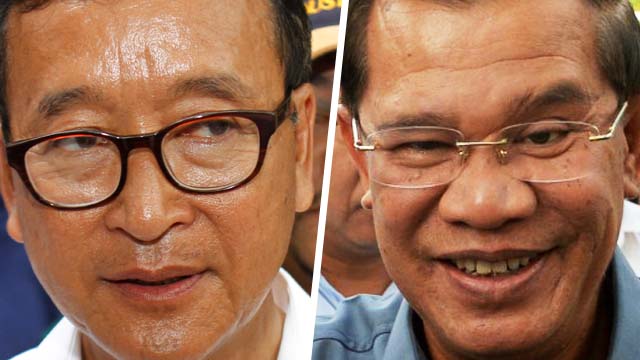
Left: Mr. Sam Rainsy--Leader of CNRP
Right: Dictator Hun Sen--Loser of CPP and Hanoi-puppet
The CPP on Tuesday threatened legal action against the CNRP if it did not cease its “defamatory rhetoric” regarding the ruling party’s relationship with the National Election Committee (NEC), which the opposition accuses of rigging July’s election in order to keep the CPP in power.

The CPP on Monday released a statement rejecting accusations of collusion with the NEC, and Phay Siphan, spokesman for the Council of Ministers, said Tuesday that there were legal avenues the ruling party could take in order to silence the CNRP.

“Everyone has their limits and we need the CNRP to know what our limits are—we can’t accept these defamatory, discrediting accusations anymore,” Mr. Siphan said.

“We respect freedom of expression but this is not freedom of ex­pression. There are laws in place to protect organizations against such defamatory rhetoric. Legal action may be taken.”

Monday’s CPP statement came a week after negotiations between the rival parties to form a subcommittee to investigate polling day complaints faltered, with the CPP and CNRP unable to agree on the NEC’s role in such a committee.

“Accusations which claim the Cambodian People’s Party colluded with the National Election Committee to cheat for votes are groundless accusations intended to create public confusion in relation to the election process in Cambodia,” the statement reads. “[The] CPP would like to strongly deny those accusations.”

The CNRP has repeatedly called for an independent investigation into reports of widespread electoral irregularities, saying that the NEC is a tool of the ruling party—concerns that have also been voiced by the U.N. human rights special rapporteur to Cambodia, Surya Subedi, and the Committee for Free and Fair Elections in Cambodia.

CNRP spokesman Yim Sovann on Tuesday reiterated the opposition’s doubts over the NEC’s impartiality and questioned Mr. Siphan’s threat of legal action.

“It’s for the whole world to see—the NEC is systematically appointed by the CPP,” he said. “The voters know it, the U.N. knows it and the international community knows it.”
...Read more>>>

Vietnam caught between a rock and a hard place

YaleGlobal August 9, 2013 by David Brown

Is disappointment with China the reason behind Vietnam president's recent hurried visit to Washington?

Early in June, US State Department officials told a Congressional sub-committee that closer ties with Vietnam, in particular weapons sales, are on hold until there is "continued, demonstrable, sustained improvement in the human rights situation". The officials put on the public record a message that US diplomats have been delivering privately for a couple of years. Their testimony largely went unnoticed except by the online media that stoke the fires of dissidence in Vietnam.

Coincidentally, Vietnamese police arrested yet another blogger on June 13, charging Pham Viet Dao with "abusing his right of free speech to undermine the interests of the State". Over 40 dissidents have been jailed this year, twice the pace of 2012. Moreover, there's evidence that the cyber-security arm of Vietnam's police has deployed FinFisher surveillance technology - made by UK-based Gamma International - to plant spy software in computers and smartphones of people who access dissident blogs.

Hanoi has not welcomed American comments on human rights issues. Party stalwarts gag on demands that Vietnam allow greater democratic freedoms, fearing that Washington's true objective is to bring down the regime.

The crackdown on bloggers seemed to manifest a regime tilt toward China, the bEte noire of Vietnam's dissidents. For years, dissident bloggers have flayed the regime for, they say, its failure to defend Vietnam's interests against its giant neighbour. Exhibit A: China's step-by-step solidification of a claim to "indisputable sovereignty" over most of the South China Sea, including waters off Vietnam's coast.

Vietnam's naval and air forces, though not insignificant, are no match for China's. Rather than risk clashes over disputed rocks and reefs - and possible oil and gas deposits - Vietnam's rulers have sought to brake Chinese aggression by rallying the support of ASEAN partners and by forging "strategic relationships" with the US and other extra-regional powers. The results of these diplomatic efforts have been modest. Asean's 10 members have jawed on about "centrality" in regional matters, but failed to establish a common front with respect to China's sweeping territorial claims.

Meanwhile, wary of being manoeuvred into defending Vietnamese or Filipino islets, the US has insisted that it "does not take sides" on territorial disputes. Worried also that the rising superpower will retaliate in other areas, Washington and most ASEAN capitals have shied away from direct challenge to Beijing's quest for hegemony over waters lying between Hong Kong and Singapore.

Beijing's claims are based on records of visits by fishermen centuries ago. In contrast, the Philippines, Malaysia, Brunei and Vietnam rely on the UN Charter on the Law of the Sea and other international law. Policy shepherds in Washington agree that the thicket of claims must be untangled by reference to those legal precepts. But this stance is undermined by repeated US failures to ratify UNCLOS and the failure of the four ASEAN frontline states to sort out conflicting claims among themselves. The stance offers no clue to Washington's course if Beijing continues to nibble its way toward a fait accompli.

As tensions have risen, non-Communist Vietnamese and a significant faction within the Communist Party have urged a de facto economic and military alliance with the US. There's been progress toward Vietnam's membership in the projected US-led Trans-Pacific economic partnership. Although many party leaders remain sceptical of US intentions, in the last four years there's been remarkable expansion of consultations with the US armed forces. In June, for example, senior members of Vietnam's general staff toured US bases.

Until recently, that sort of military-to-military dalliance, designed to signal to Beijing that Hanoi has options, seemed to have hit its natural limits - friendly visits and a bit of training in non-combat activities like search-and-rescue. A year ago Vietnam rejected former US secretary of defence Leon Panetta's proposal that it host rotations of US troops and warships.

Again this spring, Beijing flexed its maritime muscles. Uncharacteristically, Hanoi hardly reacted. In May, it registered complaints about rough treatment dealt to Vietnamese fishermen and denied a PetroVietnam report that Chinese vessels had harassed one of the state oil company's survey ships. Why became clear on June 14, when Hanoi announced that Vietnam's President Truong Tan Sang would pay a state visit to China.

Sang's trip, the first by a top Vietnamese leader since Xi Jinping was installed as China's president in March, was loaded with ritual and meaning accrued over a millennium of such missions. The Vietnamese are justly proud of a tradition of successful resistance to invading Chinese armies. Also throughout their history, they've often induced China to respect Vietnam's autonomy by projecting deference. Hanoi was kowtowing vigorously.

The orchestration of Sang's visit suggests that, notwithstanding frictions, Vietnam's leaders remain hopeful that China's leaders will not betray a ruling party so like their own. There was the usual heavy stress on the two countries' "comprehensive strategic relationship". Signatures were affixed to a sheaf of routine agreements.

Other than an earful of admonition, Sang appears to have taken little home from Beijing. Xi promised that China would "actively take effective and drastic measures" to narrow a $16 billion imbalance in bilateral trade flows. Such promises have been made before to no great effect. On the South China Sea, Sang had nothing to show but agreement on a hotline to discuss incidents involving fishermen. By rejecting mention of UNCLOS, to which both nations are signatories, and other prescriptions of international law as the foundation of a territorial settlement, Beijing stepped back from assurances it gave Vietnam 20 months ago when Hanoi agreed to bilateral negotiation of claims to the Paracels, islets that China wrested from South Vietnam in 1974. Those talks haven't made progress. Conceding as much, Xi and Sang agreed that they'd be intensified.

The Politburo's subsequent decision to send Sang to Washington on July 25 suggests that Vietnam's leaders have been shaken by what Xi and his colleagues told Sang in private, and are ready to deal with the US on a more intimate defence relationship. A leading dissident was to go to trial on the day before Sang's pending trip was announced; that trial has been indefinitely postponed. Vietnam's leaders may hope President Barack Obama will settle for such cosmetic gestures. If so, they are likely mistaken.

As the administration acknowledged to Congress last month, "the American people will not support a dramatic upgrading of bilateral ties without demonstrable progress on human rights". In fact, the US does not need a more robust military tie with Vietnam to defend its interests in the South China Sea. It can afford to take the long view and surprise cynics by standing firm on human rights. With Vietnam War veterans John Kerry and Chuck Hagel now supervising US foreign and defence policy, that may be exactly what the US will do.

David Brown is a freelance journalist and retired US diplomat who worked in Vietnam for many years.
...Read more>>>

US criticizes Vietnam new Internet control decree

August 6,2013

HANOI, Vietnam (AP) The United States joined global Internet giants Google and Facebook on Tuesday in criticizing a new decree in Vietnam that further curbs online free speech and forces foreign companies to keep servers inside the country.

The Internet has emerged as a major avenue of dissent in Vietnam, alarming conservative elements in the Communist government. Authorities want to stifle dissent, but must balance this with the reality that a free Internet is important to maintaining economic growth and attracting investment.

It issued Decree 72 last month, prohibiting the posting of material that "opposes" the Socialist Republic of Vietnam and "harms national security" and other vague terms. The decree cements an ongoing crackdown: Many of the 46 people convicted this year under other laws banning dissent were bloggers.

U.S. officials in Hanoi, as well as large multinational Internet companies, lobbied the government during the drafting process. Some of the more draconian elements were dropped, but the U.S. Embassy in Hanoi made it clear that it was disappointed with the final version.

"Fundamental freedoms apply online just as they do offline," the embassy said in a statement. "We are deeply concerned by the decree's provisions that appear to limit the types of information individuals can share via personal social media accounts and on websites."

Google and other Internet companies have been seeking to expand their business in Vietnam, which has a rapidly growing Internet sector, but are wary about having to cooperate with censorship requests and give up users' personal information to authorities.

The decree stipulates that foreign companies have to keep at least server inside the country, a move that gives the government some control over their activities. But this increases costs for multinational seeking to expand in Asia, effectively functioning as barrier to enter the market.

"We believe that the decree will negatively affect Vietnam's Internet ecosystem," said the Asia Internet Coalition, an industry grouping representing Google, Facebook and other Internet companies. "In the long term, the decree will stifle innovation and discourage businesses from operating in Vietnam."

It remains to be seen how much of the decree, which comes into effect on September 1, will be enforced.

Google and Facebook are currently the dominant players in the search and social sectors of the Internet market in Vietnam. They don't have offices inside the country, but are able to market their products. The government wasn't immediately available for comment.
...Read more>>>

Vietnam human rights bill approved by U.S. House of Representatives

Source: Baptist Press, August 5,2013

WASHINGTON (BP) -- The U.S. House of Representatives has approved nearly unanimously a bill designed to advance religious freedom and other human rights in Vietnam.

In a 405-3 roll call Aug. 1, the House approved the Vietnam Human Rights Act, H.R. 1897, which will prohibit any increase in non-humanitarian U.S. aid to the Southeast Asian country if its government does not make significant progress in promoting human rights. The Senate has yet to act on the proposal.

Among its goals, the bill seeks to end religious abuses and return confiscated property to churches and religious communities.

The legislation also expresses the sense of Congress that the State Department should re-designate Vietnam as a "country of particular concern," a classification reserved for the world's worst violators of religious freedom.

The bill's purpose is "to send a clear, strong, and compelling message to the increasingly repressive communist regime in power in Vietnam that says that the United States is serious about combating human rights abuse" in that country, said Rep. Chris Smith, R.-N.J., in a written statement. Smith is the bill's House sponsor.

Protestants, Catholics, Buddhists and adherents of other faiths face government abuse, Smith said. Government officials have jailed journalists and have been complicit in human trafficking, Smith said.

The House-approved bill says the Vietnamese government "continues to limit the freedom of religion, restrict the operations of independent religious organizations, and persecute believers whose religious activities the Government regards as a potential threat to its monopoly on power."

According to the legislation, "unregistered ethnic minority Protestant congregations, particularly Montagnards in the Central and Northwest Highlands, suffer severe abuses because of actions by the Government of Vietnam, which have included forced renunciations of faith, arrest and harassment, the withholding of social programs provided for the general population, confiscation and destruction of property, subjection to severe beatings, and reported deaths."

The only representatives to vote against the bill were Republicans Paul Broun of Georgia and Walter Jones of North Carolina, as well as Democrat Gregory Meeks of New York.

The House vote followed by a week a July 25 state visit to Washington by Vietnamese President Truong Tan Sang. In a joint news conference, President Obama said they "had a very candid conversation about both the progress Vietnam has made and the challenges that remain."

In a statement released later, the White House noted "narrow differences" between the two countries on the issue of human rights, but a statement in Nhan Dan, the official newspaper of Vietnam's Communist Party, claimed the differences were "many and significant."
--30--
Compiled by Baptist Press Washington bureau chief Tom Strode. Get Baptist Press headlines and breaking news on Twitter (@BaptistPress), Facebook (Facebook.com/BaptistPress) and in your email (baptistpress.com/SubscribeBP.asp).
...Read more>>>

HRW: Cambodia Ruling Party Orchestrated Vote Fraud

Human Rights Watch- New York - July 31,2013

Donors Should Demand Independent Investigation of Election Irregularities

People search for their names on lists at a polling station in Phnom Penh on July 28, 2013.

(New York) – The ruling Cambodian People’s Party (CPP) appears to have been involved in electoral fraud in Cambodia’s July 28, 2013 national elections, according to residents and ruling party officials interviewed by Human Rights Watch. All allegations of election fraud and other irregularities, including bias in the election machinery, should be promptly investigated by an independent commission.

The CPP-controlled National Election Commission (NEC) released preliminary results showing that the ruling party won 68 seats and the opposition Cambodian National Reconciliation Party (CNRP) won 55. Based on the same results, the CPP won approximately 49 percent of the national vote, while the CNRP won approximately 44 percent. The opposition has claimed widespread fraud and called for the creation of an independent expert body that includes the United Nations and nongovernmental groups to examine the results and address irregularities.

“Senior ruling party officials appear to have been involved in issuing fake election documents and fraudulently registering voters in multiple provinces,” said Brad Adams, Asia director. “And people from the party seem to have been turning up in places where they clearly don’t live and insisting on voting – not to mention the many other claims of fraud around the country.”

A CPP village chief, who asked for anonymity to protect his security, gave Human Rights Watch an insider’s account of how ruling party authorities in his district engaged in electoral fraud by issuing fraudulent “Identity Certificates for Elections” (ICE) before the July 28 elections. The certificates allow people whose names appear on voter registration lists to vote even though they otherwise lack proper identification documents.

The village chief, whose local CPP superiors worked under instructions from a CPP Center-Level Work Team headed by an army general and a CPP Central Committee member, told Human Rights Watch that his immediate party superiors directly oversaw the illegal issuance of certificates. He explained that a member of the general’s team gave the instructions to issue certificates in the names of villagers who were on the voter registration rolls but were known either to be dead or to have long left their original homes.

The work team member allegedly arranged for soldiers and their wives from an army division stationed in the province to be photographed for certificates. These were then issued by CPP commune and Interior Ministry officials, who allegedly conspired in the scheme to falsely certify these soldiers and their wives as local residents eligible to vote in the commune where these officials were responsible for voter registration. One media report, which is consistent with other accounts, recounted villager descriptions of army-organized voting by thousands of soldiers shipped across provincial boundaries in military vehicles to vote in parts of Siem Reap province where none of them had ever been seen before.

“Issuing hundreds of thousands of fake identity certificates was allegedly one of several key ways the ruling party organized large scale election fraud,” Adams said. “Now, a CPP village chief has confirmed that this happened in his area.”

In another case, villagers in Kandal province, adjacent to the capital, Phnom Penh, described to Human Rights Watch efforts by senior CPP officials to vote in more than one place. When confronted by local residents, the party officials threatened them with arrest and later returned and made death threats.

Numerous residents of Koki Thom commune in Kandal interviewed by Human Rights Watch said that on election day, Ngo Sovan, whose business card states that he is “minister delegate attached to the prime minister” and specifies that he is a secretary of state at the Ministry of Justice, arrived in their commune to vote. He was accompanied by other members of the party’s grassroots strengthening team assigned to the area, as well as by Heng Seksa, whose card says he is a “deputy secretary-general of the Royal Cambodian Government,” and an entourage of dozens of government officials from Phnom Penh.

The villagers protested the group’s attempt to vote there, asserting to local electoral authorities that none of the people were local residents. The local electoral authorities, whom the villagers described as linked to the ruling party, nevertheless allowed the group to cast ballots.

Ngo Sovan’s team included several national level civil servants. According to the national voter registration list compiled from official data on the National Election Committee website and examined by Human Rights Watch, Ngo Sovan was registered to vote in three places. The first (voter registration number R-1424108) is at his known residence in Phnom Penh, where he is a prominent figure and resident, according to local residents Human Rights Watch interviewed.

Ngo Sovan is also registered in the provinces of Kandal (voter registration number R-6132454) and Svay Rieng (voter registration number R-6851267). He heads ruling party election grassroots strengthening or work teams in both provinces. In Kandal, Ngo Sovan also ran as a CPP candidate for the National Assembly.

Heng Seksa, who accompanied Ngo Sovan in Kandal, was registered to vote in both Phnom Penh (voter registration number R-6354916) and Kandal (voter registration number R-6132299), according to official data from the NEC website.

Villagers told Human Rights Watch that members of the entourage threatened them with arrest during the confrontation over whether the group’s members would be allowed to vote. After polls closed, a contingent of “flying tiger” motorcycle police arrived in the area. Villagers told Human Rights Watch that the police said they were looking for “ringleaders” of the “disturbances” that had occurred when the ruling party group’s voter registration was challenged.

The morning after the elections, some members of the group reappeared in the village along with others, including one armed man in civilian clothes, who attempted to identify and apprehend an alleged “ringleader.” Two witnesses told Human Rights Watch that members of the group threatened to kill villagers who refused to provide information on the whereabouts of the alleged ringleader, whom the group also vowed to kill and who has gone into hiding.

“The multiple voting scheme suggests the possibility of systematic election fraud by the CPP and raises serious questions about the credibility of the election,” Adams said. “Since the National Election Committee and local election commissions are under the ruling party’s control, influential governments and donors should demand independent investigations into these and other credible allegations of election related irregularities. Without this, it’s hard to see how Cambodian voters can have confidence in the legitimacy of the elections and the new government that results.”
...Read more>>>

Cambodia Election - Feeling Cheated

The Economist - Jul 29th 2013, 10:55 by L.H. | PHNOM PENH

Voters Protest on Election Day July 28,2013

NOT long after the prime minister, Hun Sen, cast his vote at a teacher’s college on July 28th, the first signs of trouble emerged. Allegations that the electoral roll had been rigged were coming in from across Cambodia and a riot was about to erupt on the outskirts of the capital, Phnom Penh. The counting made it plain that Hun Sen and his Cambodian People’s Party (CPP) had won, and by a generous margin. But the opposition made substantial gains—as well as claims that the CPP had cheated.

It was a dramatic conclusion to a dramatic home stretch. On July 12th the government had issued a pardon to Sam Rainsy, an opposition leader who had exiled himself from Cambodia since 2009, while criminal charges were prepared against him. He made his homecoming on July 19th, when he was met by a jubilant crowd. They may have hoped that Mr Sam Rainsy’s presence could bring their party an outright victory in the polls, but he seemed to have known better. Even then, with a week to go before the election, he was threatening to have the results condemned if the rules weren’t changed.

When July 28th came round, some voters were angered to discover that their names were not on the rolls, or that other people had already voted under their names. Other rumours flew furiously: for instance that the CPP was shipping in Vietnamese from across the border to cast ballots.

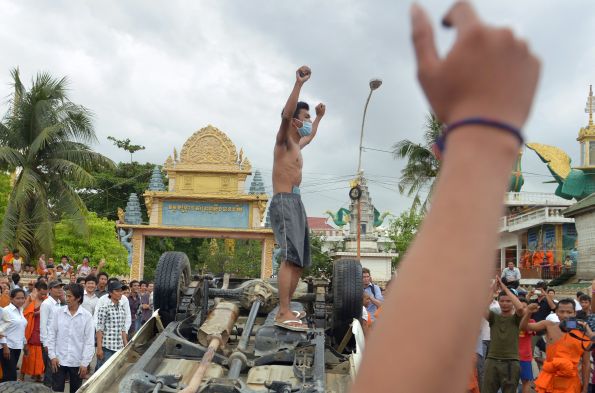
“Khmer can’t vote—yuon can,” went up the cry on social-media sites and among many who were protesting against the CPP. Yuon means Vietnamese people in Khmer, the main language of Cambodia. Many regard it as a highly derogatory term. Two police vehicles were overturned and set alight. By nightfall troops were deployed, roads blocked and Phnom Penh’s lively rumour mill had gone into overdrive. It all made a tense atmosphere tenser.

By the end of preliminary counting, the CPP acknowledged that the Cambodian National Rescue Party (CNRP) led by Mr Sam Rainsy had picked up 55 seats, an impressive improvement on the 29 seats it had already held in the 123-seat parliament. The CPP won 68 seats for itself, down from 90, and so lost the two-thirds majority which had enabled it to rewrite the constitution. Minor parties, including the once-formidable royalist Funcinpec party, were obliterated.

Mr Sam Rainsy stayed true to form. Throughout the campaign he stoked popular anti-Vietnamese sentiment, and with it a familiar fear of hegemony on the part of Cambodia’s big neighbour to the east. Mr Sam Rainsy’s critics in Cambodia say his rhetoric verged on being xenophobic. The Vietnamese embassy issued a rare statement that accused him of using racially charged rhetoric to score political points.

That is even more a shame for the fact that he probably didn’t need it. This election was decided on more practical issues. The opposition’s greatest advantage was the anger that has been mounting against the massive land concessions that are granted to Chinese and Vietnamese companies; a widening wealth disparity; and gross corruption that favours the politically connected.

These issues were made more potent by the emergence of a powerful youth vote. Demographic change has altered the political landscape; those born as Cambodia’s civil wars were ending two decades ago are just now coming of age. Being too young to remember the 1980s and ’90s themselves, they tend to be unmoved by Mr Hun Sen’s main argument: that an opposition victory could spell a return to civil conflict.

Armed with smartphones and social media, the youth went to the barricades for the CNRP. This made for an especially lively campaign, and in turn diminished the relevance of the government-friendly media. Its propaganda machine, in the end, was capable of little more than preaching to the choir.

The opposition has rejected the results formally and demanded that an independent committee be set up to investigate the irregularities and their impact on the poll. One day after the polls closed, independent election monitors said it was too early in the counting process to determine whether the vote was free and fair. The Committee for Free and Fair Elections in Cambodia (Comfrel) noted some worrying irregularities, including the use of ink that was supposed to be indelible—to prevent people from voting more than once—but in fact washed off easily. Comfrel also noted the disappearance of some names from the voter lists prepared by the National Election Committee, and the fact that strangers were spotted loitering about some polling booths.

Mr Sam Rainsy told a hastily arranged press conference that the opposition was not trying to bargain its way into government. “What we are interested in,” he said, “is to render justice to the Cambodian people.”

Meanwhile Mr Hun Sen, who over 28 years has established himself as the longest-serving elected leader in South-East Asia, was staying tight-lipped. He has been handed a stark choice: Reform the CPP, or dig in his heels. Any real reform would have to include laying down a clear path for succession. If he insists on maintaining the status quo then civil unrest is almost certain, whatever may be said about future elections.

(Picture credit: AFP)
...Read more>>>

Refugee laws ignored: report

Source: Phnom Penh Post July 1,2013

Cambodian government officials have done little to enforce laws meant to protect the rights of Kampuchea Krom refugees, a recent report compiled for the UN says.

The five-page report, written by the Unrepresented Nations and Peoples Organization (UNPO), will be submitted to the United Nations Office of the High Commissioner for Human Rights ahead of its 2014 periodic review of Cambodia and Vietnam.

“In the areas of civil and political rights enough mechanisms are in place to adequately guarantee the rights of minorities, however, the implementation thereof is severely lacking,” the report says. “It takes political will from the Cambodian government.”

Despite the Cambodian government’s official stance that those who live in Kampuchea Krom – an area of southern Vietnam that was once part of the Khmer empire – are considered Cambodian nationals, they face discrimination and difficulties when trying to claim refugee status or obtaining identity cards in Cambodia, the report states. When applying for ID cards, applicants must show proof their parents are of Khmer ancestry, proof of their occupation and a permanent address – documentation people fleeing discrimination in Vietnam rarely possess.

“They didn’t have the rights that other Cambodian citizens have,” said Denise Coghlan, Cambodia country manager for Jesuit Refugee Services, an Australian Catholic NGO that focuses on refugee rights. The exact legal status for Khmer Krom remains fuzzy, she said.

The Cambodian constitution guarantees religious freedom in the Kingdom, but the UNPO report notes Khmer Krom Buddhist monks suffer systematic harassment and persecution in Vietnam and Cambodia. Khmer Kampuchea Krom have been detained, tortured and had their freedoms of speech and assembly trampled upon, the report notes.

About 200 people gathered in Phnom Penh last week to demand the release of two Khmer Krom monks Liv Ny and Thach Thoeun, both 30, who were arrested by Vietnamese authorities on charges they associated with pro-Khmer Krom organisations abroad.

UNPO’s report mentioned that although protections guaranteed by the constitution are often ignored by authorities, their existence is a step in the right direction.

“Despite widespread violations of human rights inflicted upon members of the Khmer Krom and Degar [montagnard] minorities, the government of Cambodia should be commended for incorporating key human rights . . . in their national constitution,” the report notes.

In order to improve its human rights standing for minorities, Cambodia should simplify the process in which Khmer Krom refugees can apply for ID cards, commit to investigating allegations of abuses by law enforcement among other steps toward inclusiveness.

The Cambodian government’s Human Rights adviser, Om Yentieng, declined to comment yesterday.
...Read more>>>

Smith Human Rights Bill on Vietnam Passed by Foreign Affairs Committee

Rep. Chris Smith (R-NJ) News Release

June 28, 2013 (Menafn - Congressional Documents and Publications/ContentWorks via COMTEX) --Washington, Jun 27 - Legislation on human rights issues in Vietnam was passed by the House Foreign Affairs Committee, said Rep. Chris Smith (NJ-04) author of the legislation, the Vietnam Human Rights Act of 2013.

The bill was approved in a unanimous voice vote of the full Committee.

Smith's Vietnam bill, H.R. 1897, would institute measures to improve human rights in Vietnam by prohibiting any increase in non-humanitarian assistance to the Government of Vietnam above Fiscal Year 2012 levels unless the government makes substantial progress in establishing a democracy and promoting human rights. The bill aims for improvement in freedom of religion (and releasing all religious prisoners), rights to freedom of expression, assembly and association, the release of all political prisoners, independent journalists, and labor activists, and to end any government complicity in human trafficking.

"Brazen human rights violations by the hands of the Vietnamese Government continue against its own people," Smith said, noting an April 11 congressional hearing that detailed widespread abuses, as well as government officials' involvement in trafficking Vietnamese women to Russia, Jordan and other locations. "The powerful testimony before Congress showed widespread religious, political and ethnic human rights abuse, and that Vietnamese Government officials are complicit in human trafficking. Vietnam, in fact, continues to be among the worst violators of religious freedom in the world," Smith said, noting the rights and freedoms of Buddhists, Catholics, Protestants and other faiths are routinely trampled upon by the government.

Go to: http://chrissmith.house.gov/news/documentsingle.aspx?DocumentID=328489 for information about the April hearing, or go to: http://foreignaffairs.house.gov/hearing/subcommittee-hearing-highlighting-vietnamese-government-human-rights-violations-advance-us to view Smith's opening remarks at the hearing or witnesses' testimony. Smith's bill was subsequently passed by the House global human rights panel, the Subcommittee on Africa, Global Health, Global Human Rights, and International Organizations, which Smith chairs, on May 15.

Read this original document at: http://chrissmith.house.gov/news/documentsingle.aspx?DocumentID=340844

Copyright (C) 2013 Federal Information & News Dispatch, Inc.
...Read more>>>

UNPO Exposes Human Rights Abuses in Cambodia and Viet Nam

UNPO has submitted reports to the United Nations High Commissioner for Human Rights in anticipation of the Universal Periodic Review of the Kingdom of Cambodia and Socialist Republic of Viet Nam. These reports focus shed light on the marginalisation of the Khmer-Kampuchea Krom, Hmong and Degar-Montagnards.

The United Nations (UN) Universal Periodic Review is a mechanism which assess UN member countries’ human rights performance. Every four and a half years the situation of human rights within a state is assessed, and both Cambodia and Viet Nam are up for review at the 18th session in early 2014.

Despite the difference in countries, there is some overlap in the human rights issues. Specifically, in neither country has the indigenous status of any member been recognised, nor does either country possess an effective mechanism for processing land claims, and land-grabbing and dispossession and common practices. Moreover, religious persecution exists both in Cambodia and Viet Nam, and it has been associated with abuse by law enforcement officers, arbitrary arrests, indefinite detentions, extrajudicial torture, and the forced defrocking of monks.

Furthermore, in Viet Nam traditional Khmer names (of people, villages, districts and provinces) must be substituted with Vietnamese names, and the Khmer language is considered illegal under the constitution. Vietnamese authorities further repress the Khmer by censoring Khmer activist websites, and cultural and religious television broadcasts from abroad. Education in indigenous languages is also prohibited in most schools, and when allowed, textbooks are poorly written and ridden with mistakes. Imported textbooks are banned.

In Cambodia, the government bureaucracy makes it nearly impossible for Khmer Krom or Degar-Montagnard asylum seekers to be granted refugee status or identification cards. The requirement of unrealistic criteria (such as a permanent address in Cambodia) effectively prohibits the acquisition of such statuses. And when the refugees are able to satisfy the stringent criteria, often the authorities illegally force Khmer Krom to adopt a Cambodian name and perjure their place of birth to Cambodia. Additionally, the Cambodian state has pressured a refugee centre operated by the UN to shut down, decreasing transparency in how Cambodia deals with refugees.

UNPO’s reports make a series of recommendations to the HRC, including to:
[Viet Nam & Cambodia] Formally acknowledge and confirm the indigenous status of the Khmer Kampuchea Krom peoples, as well as that of the Christian Degar Montagnards;

[Viet Nam & Cambodia] Create an effective mechanism for the settlement of outstanding land claims by indigenous groups, and compensate those groups for the loss of their ancestral lands, as stipulated by Article 8 of the Universal Declaration on the Rights of Indigenous Peoples;

[Viet Nam & Cambodia] Commit to investigating widespread allegations of abuse by law enforcement, arbitrary arrests, and extrajudicial torture, and explore possible judicial remedies for victims and their families.

[Viet Nam & Cambodia] Sign and ratify International Labour Organization Convention 169 concerning Indigenous and Tribal Peoples in Independent Countries, with the aim of respecting the traditions of indigenous peoples in relation to the use of their ancestral lands;

[Viet Nam] Amend domestic law provisions that criminalizes certain religious activities on the basis of vaguely-defined crimes of national security

[Viet Nam] Permit outside experts, including those from the United Nations and independent international human rights organizations, to have access to indigenous and minority communities in Vietnam;

[Cambodia] Afford refugee status, and the protections it entails, to all individuals, including Khmer Krom and Degar individuals, who satisfy the internationally accepted definition of a refugee. This includes ceasing the forced repatriations of Degar and Khmer Krom asylum seekers;

[Cambodia] Clarify the situation regarding the granting of citizenship to Khmer Krom individuals with authorising offices and officers, including what evidence is needed and what practices are not to be tolerated.


Source: http://www.unpo.org/article/16105
...Read more>>>

Access submits UPR report on Vietnam: Cyber attacks on civil society a key concern

3:57pm | 19 June 2013 | by Connor Gadek
Deborah Brown contributed to this post


Access has partnered with ARTICLE 19, PEN International, and English PEN on a joint submission on Vietnam to the United Nations Universal Periodic Review (UPR). The submission focuses on the lack of improvement of human rights, specifically freedom of expression, in Vietnam since the last UPR in 2009, and highlights the Vietnamese government’s troubling response to the recent increase in cyber attacks against civil society.

The UPR was established in 2006 by the UN General Assembly to ensure the “fulfilment by each State of its human rights obligations.” The UPR is a mechanism to review the human rights record of all UN Member States and make recommendations for improvement every 4.5 years. Vietnam’s next review – when Access’ UPR submission will be taken into account – is scheduled for January 2014.

The submission notes that considerable limitations on free expression in Vietnam remain despite the fact that the Vietnamese government accepted a recommendation from the government of Sweden during its last review to “ensure that full respect for the freedom of expression, including on the Internet, is implemented.” Of particular concern is state controlled media and the lack of press freedom, restrictive legislation on freedom of expression, internet surveillance and cyber attacks on civil society, and the persecution of writers, journalists, bloggers, and human rights defenders.

Cyber Attacks

In the second cycle, we highlight the fact that cyber attacks on civil society in Vietnam have recently escalated to include: Denial-of-Service (DoS) attacks, fake domains, account takeovers, and website defacement. The impact of these attacks extend far beyond those directly targeted. The attacks broadly infringe upon civil society’s freedom of association, freedom of expression, and right to access information which are established by the International Covenant on Civil and Political Rights, to which Vietnam is party.

The report notes that pro-government actors in Vietnam have used DoS attacks to make independent media websites unavailable by falsely overloading the sites with internet traffic until they crash. The DoS attacks target websites that are either critical of the government or offer a platform for activists to organize, such as Facebook which is often inaccessible to many in Vietnam for varying lengths of time.

In Vietnam, pro-government actors have utilized fake domains to mirror the exact information of independent media websites while serving malware to their web visitors. The malware is used to implement key-loggers onto the visitor’s computer in order to access their private account information.

In addition, civil society organizations and activists in Vietnam have been subject to account takeovers. This is often accomplished through the use of malware-laden fake domains which breach an internet user’s digital security to access their private account information. On 26 May 2013, the government arrested Vietnamese blogger Truong Duy Nhat and his website was immediately compromised. Just after his arrest, visitors to his website would receive malware downloaded and installed onto their computers without the website visitor’s knowledge.

Website defacement has also been used in Vietnam as a tactic to suppress speech by changing the content of independent media websites’ to promote alternative views to the original content. These attacks are meant to delegitimize independent media and hinder activists’ ability to peacefully organize against government policies.

Recommendations

The UPR submission makes several important recommendations to the Vietnamese government on how to improve its treatment of digital rights and free expression. These include allowing online anonymity, allowing internet users to access blogs and websites outside of Vietnam, ending arbitrary surveillance of internet users, and ending any use of cyber attacks.

The review also requests that the Vietnamese government allow UN human rights experts, known as special rapporteurs, on the promotion and protection of the right to freedom of opinion and expression, on the rights to freedom of peaceful assembly and of association, and on the situation of human rights defenders to visit and evaluate the current situation in Vietnam.

The UPR is the first mechanism put in place by the UN to address all human rights issues in all countries. This process is one of the few ways for NGOs to work with governments to improve human rights and hold them accountable to international law. Access is concerned by the ongoing violations of freedom of expression in Vietnam and the specific targeting of Vietnamese civil society, who use the internet to exercise their fundamental rights. We view Vietnam’s UPR as a valuable opportunity to engage the government on the global stage and to raise international pressure on Vietnam to protect and promote human rights, both online and off.
...Read more>>>

Vietcongs police arrest anti-government blogger

HANOI | Fri Jun 14, 2013 5:06am EDT

Blogger Pham Viet Dao
(Reuters) - Vietnamese police have arrested an author and blogger for posting anti-government comments online, according to authorities, the latest in a crackdown on critics of the country's Communist rulers.

Pham Viet Dao, 61, was arrested on Thursday at his Hanoi home and accused of breaching a law prohibiting "abuse of democratic freedom" and "infringements against the state", according to the Ministry of Public Security.

If the case goes to trial and Dao is found guilty, he could face seven years in prison.

Dao has long been critical of Vietnam's one-party system. Like other bloggers bold enough to test the limits of Vietnam's constitutionally enshrined free speech, Dao has gained notoriety as internet usage grows and discontent simmers over the government's handling of a stale economy and rampant graft.

His arrest follows that of former journalist Truong Duy Nhat on May 26, who was also held under the same law.

The authorities have taken a harsh line on dissent, with arrests and convictions on the rise in the past three years and bloggers increasingly targeted as the number of web users soars to a third of Vietnam's estimated 90 million people.

The United States is keen to boost trade with Vietnam but has urged improvements in its human rights record as a prerequisite before strengthening defense and diplomatic ties.

In a June 5 address to Congress, the U.S. State Department's envoy for democracy, Daniel Baer, described Vietnam's crackdown on bloggers as part of "a years-long trend of deterioration".

(Compiled by Hanoi Newsroom; Editing by Robert Birsel)
...Read more>>>